Learn · banking
What is a neobank?
The complete 2026 guide: how neobanks work, how banking-as-a-service lets startups offer accounts without a license, where crypto and stablecoins fit in, how neobanks make money, and a realistic tutorial on launching your own.
Alex Rivera · Crypto researcher, CryptosBeginner
Every review is research-led: specs, fees, and availability are checked against official sources before publication and re-checked on every update. Affiliate links never influence verdicts. Last reviewed 15 October 2026.
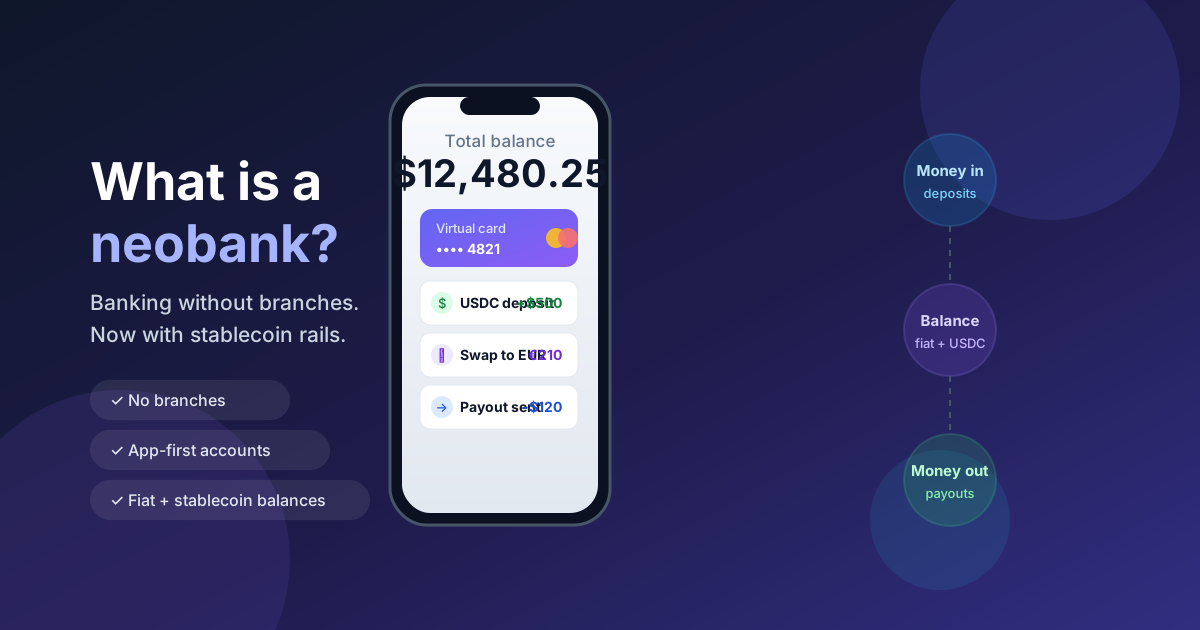
A neobank is a bank that lives entirely in an app. No branches, no queues, no marble lobbies. You open an account from your phone in minutes, get a virtual card instantly, and manage everything from one screen. Companies like Chime, Revolut, and Monzo proved the model: good software beats a branch network.
Here is the part most people miss. Around 90 percent of neobanks do not actually hold a banking license. They rent the regulated parts from a licensed partner bank and focus on what they are good at: the app, the brand, and the customer. That rental model is called banking-as-a-service, and it is the reason a small team can now launch something that looks and feels like a bank.
Add stablecoins to the mix and the idea gets even more interesting. A new wave of crypto neobanks runs on USDC and USDT rails alongside traditional payment networks, giving users one balance that works for both dollars and digital dollars. This guide explains the whole picture, and then walks through what it would actually take to launch your own.
Neobank vs traditional bank vs challenger bank
People use these terms loosely, but they describe genuinely different things. The key question is always the same: who holds the banking license, and who holds the customer?
| Traditional bank | Challenger bank | Neobank | |
|---|---|---|---|
| Banking license | Own license | Own license (usually) | Usually rented from a partner bank |
| Branches | Yes, physical network | Few or none | None, app only |
| Who holds deposits | The bank itself | The bank itself | The licensed partner bank |
| Account opening | Days, often in person | Minutes, digital | Minutes, digital |
| Typical strengths | Trust, lending, full services | UX plus regulated independence | Speed, niche focus, low fees |
| Typical weaknesses | Slow, expensive, dated apps | Costly to build and license | Dependent on partner bank |
| Examples | JPMorgan, HSBC | Monzo, Starling, N26 | Chime, Current, RedotPay |
The bottom row is the one that matters for this guide. Chime and Current are neobanks: beloved apps running on partner banks. Monzo and Starling went further and earned their own licenses, which makes them challenger banks. In practice the line blurs, and many companies start as neobanks and pursue licenses later as they grow.
How neobanks work: the three jobs
Strip away the branding and every neobank does the same three jobs. This framing comes from Whop's neobank blueprint writeup, and it is the clearest way to think about the whole category:
Money in. The neobank accepts payments so funds can arrive: bank transfers, card top-ups, crypto on-ramps, or invoices and checkout links that land straight in the user's balance.
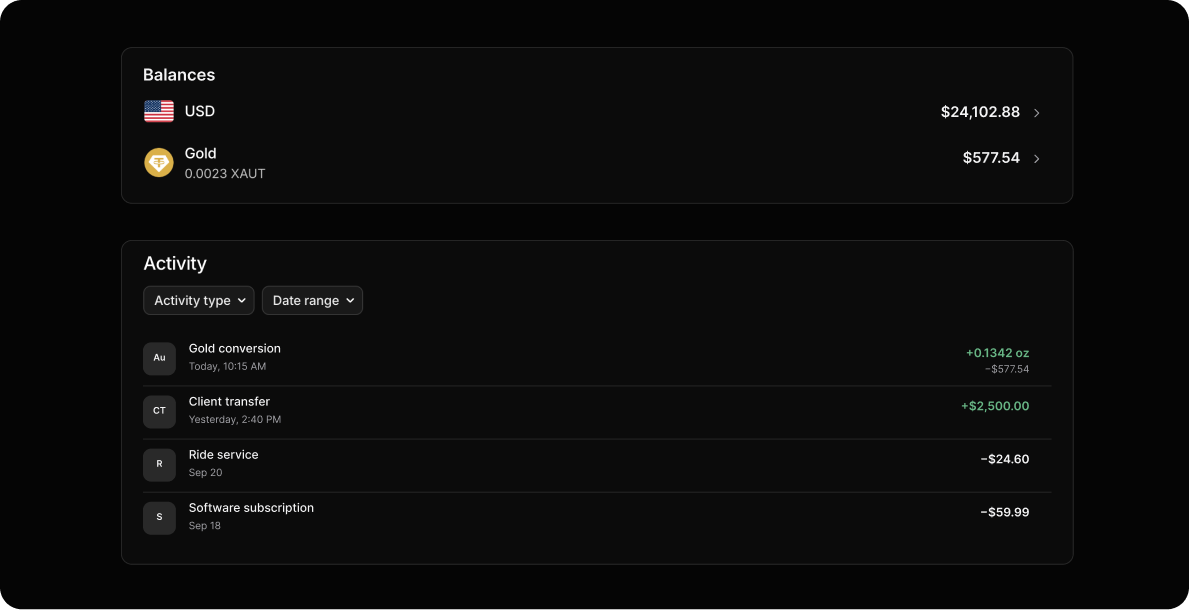
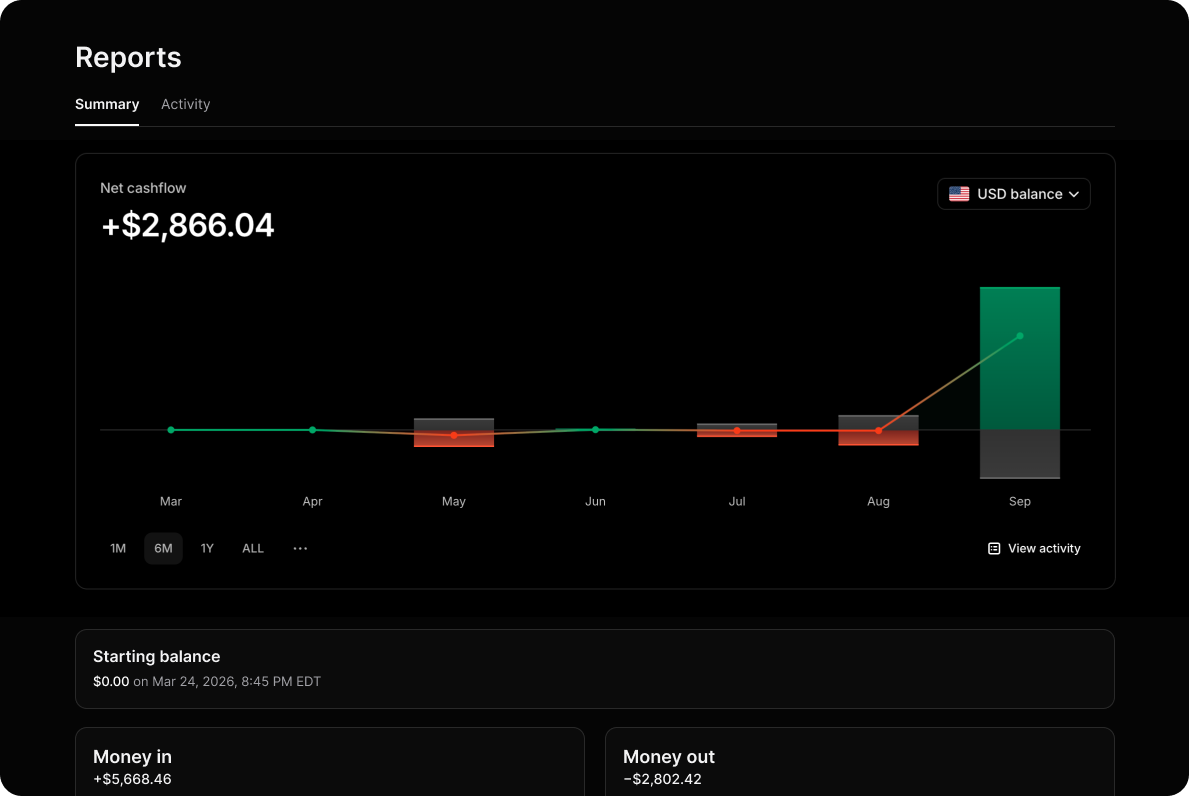
Money sits. The neobank holds a balance, in fiat, stablecoins, or both, with an activity feed showing every dollar in and out. This is the account itself, and it is where the user relationship lives.
Money out. The neobank pays out: withdrawals to a linked bank account, off-ramps to a crypto wallet, transfers to other users, and card spending.
If you understand these three jobs, you understand every neobank product decision. New features are just better ways to do one of the three: faster on-ramps, nicer balance views, cheaper payouts. Keep this model in mind; the launch tutorial later in this guide is organized around it.
Banking-as-a-service: how startups offer banking without a license
The trick behind most neobanks is banking-as-a-service, usually shortened to BaaS. A licensed bank (the sponsor bank) holds the deposits and connects to payment networks. A technology company (the BaaS provider) wraps that bank's capabilities in clean APIs. Your neobank calls those APIs, and your users see your brand, your app, and your fees. The license never touches your company.
This stack is powerful, but it has a failure mode worth knowing about. In 2024 the BaaS provider Synapse collapsed, and the mess that followed left customers of several fintech apps locked out of their money for months while banks, the provider, and courts argued over whose ledger was right. The lesson is not that BaaS is broken; the survivors invested heavily in reconciliation and direct bank relationships afterward. The lesson is that founders must know exactly which bank holds their users' money, how records reconcile, and what the migration plan is if a partner fails. Ask these questions before you sign anything.
Major BaaS and infrastructure providers in 2026
- Unit: one of the largest BaaS platforms, reporting over $100 billion in annual volume, covering accounts, cards, payments, and lending.
- Column: developer-focused, runs on its own bank charter, which removes the sponsor-bank layer and the revenue share that usually comes with it.
- Treasury Prime: known for its bank network and matching marketplace, useful if you want choice over which bank sits underneath.
- Increase: engineering-led provider that became a bank itself in 2026 with Increase Bank, an FDIC-member institution, collapsing the middleware layer.
- Synctera: strong on sponsor-bank management and compliance; acquired the compliance firm Cable in 2026.
- Marqeta: the go-to for modern card issuing, processing $291 billion in total payment volume in 2024.
- Solaris: licensed European banking platform for accounts, cards, and compliance across the EU.
Crypto neobanks: where stablecoins enter the picture
A crypto neobank does the same three jobs, but the balance can hold stablecoins next to fiat, and money can move on blockchain rails next to bank rails. A user deposits dollars by bank transfer or USDC on-chain; either way it settles into one balance. They can swap between currencies, send to another user, off-ramp to a wallet, or spend with a card. For freelancers paid across borders, or businesses operating in high-inflation economies, a dollar balance that moves at internet speed is the whole pitch.
The market is moving fast. Industry estimates put the global neobanking market at about $211 billion in 2025, growing over 60 percent a year, and stablecoin settlement is becoming the default backend for cross-border neobank products. Here are the names that matter in 2026:
| Neobank | Model | Standout features |
|---|---|---|
| RedotPay | Stablecoin neobank | 5M+ users, $10B annual volume, crypto card spending. Read our review |
| Gnosis Pay | Self-custodial | User-controlled funds with a Visa debit card, no custodial account |
| Revolut | Hybrid fintech | 40M+ customers, crypto trading and stablecoin features inside a full banking app |
| Wirex / Xapo | Hybrid | Long-running crypto-friendly accounts bridging fiat and digital assets |
| Plasma One | Stablecoin-native | Yield-bearing dollar balances, cashback, self-custody, Visa card; backed by Founders Fund |
| Dakota | Business infrastructure | Stablecoin treasury and payouts for businesses, own DKUSD stablecoin, $12.5M Series A |
| Bleap | Stablecoin-native | USDC-native accounts with instant global transfers |
The pattern is consistent: crypto-native players build on stablecoin settlement from day one, while hybrids like Revolut add it incrementally for FX and cross-border transfers. For a beginner choosing one, the questions are the same as with any neobank: who holds the license, where does the money sit, and what happens if the provider disappears.
How neobanks make money
Neobanks look free because the app is free. The money is made in the plumbing, on every dollar that moves through the three jobs. The standard revenue streams:
- Interchange: every card swipe earns the issuer a small cut of the transaction, typically the single biggest revenue line for consumer neobanks.
- FX and swap markups: converting currencies or swapping stablecoins at a rate slightly worse than wholesale. High volume, nearly invisible per transaction.
- Subscription tiers: premium plans with higher limits, better rates, and perks. This is where many neobanks finally turn profitable.
- Float and yield: balances sitting in accounts can earn interest or stablecoin yield; the neobank keeps some or all of the spread.
- Lending: licensed players lend deposits out and earn the interest margin. Unlicensed neobanks usually cannot do this directly.
- Crypto fees: trading spreads and swap fees on crypto and stablecoin conversions.
The blueprint model makes this explicit: the infrastructure provider charges a base fee whenever money moves, and you decide what your users pay on top. The difference is your revenue. Add a dollar to each of 2,000 monthly payouts and that is $2,000 a month on volume that was moving anyway. The honest caveat: BaaS partners typically take 20 to 40 percent of transaction economics through revenue shares and platform fees, so model your unit economics with the partner's cut included, not just the headline base fee.
How to launch your own neobank: a realistic tutorial
Launching a neobank used to mean raising tens of millions and spending years on licensing. The BaaS stack and template platforms have compressed that dramatically, but the compliance and economics are still real. Here is the honest path, step by step.
Step 1: Define your use case
The neobanks that work serve a specific money flow, not "banking for everyone." A marketplace paying sellers, a gig platform paying workers, an agency invoicing clients and paying contractors, a creator platform with payouts across borders. If money already moves through your product, you have a candidate. If it does not, a neobank is a solution looking for a problem.
Step 2: Choose your licensing model
Three routes, in order of cost and control:
- BaaS partnership (no own license): fastest and cheapest. A sponsor bank and BaaS provider carry the regulated layer. You build the brand, app, and operations. This is how roughly 90 percent of neobanks operate.
- E-money or payment institution license: you can hold customer funds and execute payments yourself, but not lend deposits out. Adds 6 to 18 months and typically €350,000 to €500,000 in initial capital in the EU, plus the compliance program.
- Full banking charter: maximum control, maximum cost. Starts around $2 million and commonly reaches $5 to $20 million with regulatory capital, legal work, and teams. Timelines run 18 to 36 months.
Step 3: Pick your infrastructure
If you go the BaaS route, you are choosing a stack: a BaaS provider for accounts, ledger, and APIs; a KYC vendor (Persona, Alloy, Socure, Stripe Identity); a card issuer (often via the BaaS provider, or Marqeta for custom programs); and payment rail access (ACH, FedNow, RTP). For crypto features, add on/off-ramp providers and wallet infrastructure. Evaluate providers on the regulated coverage, sandbox quality, compliance support, and pricing, and always identify the actual sponsor bank underneath.
Step 4: Brand it and build the product
Three ways to get from infrastructure to a live product. You can build custom apps on the BaaS APIs, which gives full control at full cost. You can white-label an existing neobank platform, which gets you live in 8 to 16 weeks. Or you can start from a working template: Whop's Neobank blueprint ships payments, balances, payouts, and stablecoin rails as a deployable product, which you then rebrand with AI tooling, edit via CLI, or embed piece by piece into your own app. The blueprint route is the fastest way to test whether your users actually want a neobank from you before committing serious capital.
How Whop's neobank works
- Where money sits: User payments land in a Whop Balance held in pooled FBO (for-benefit-of) accounts. US funds sit at an FDIC-member bank; non-US funds sit at ClearBank, JP Morgan, or Bank Frick. Note that these balances are not themselves FDIC insured.
- How users cash out: Withdrawals run via ACH, wire, PayPal, or crypto through Coinbase Commerce. Crypto deposits come in via MoonPay.
- Stablecoin rails: Every account also gets a self-custodial wallet (via Privy). Moving dollars into the wallet converts them to USDT. An opt-in Treasury feature routes balances through a Veda vault into Aave for yield.
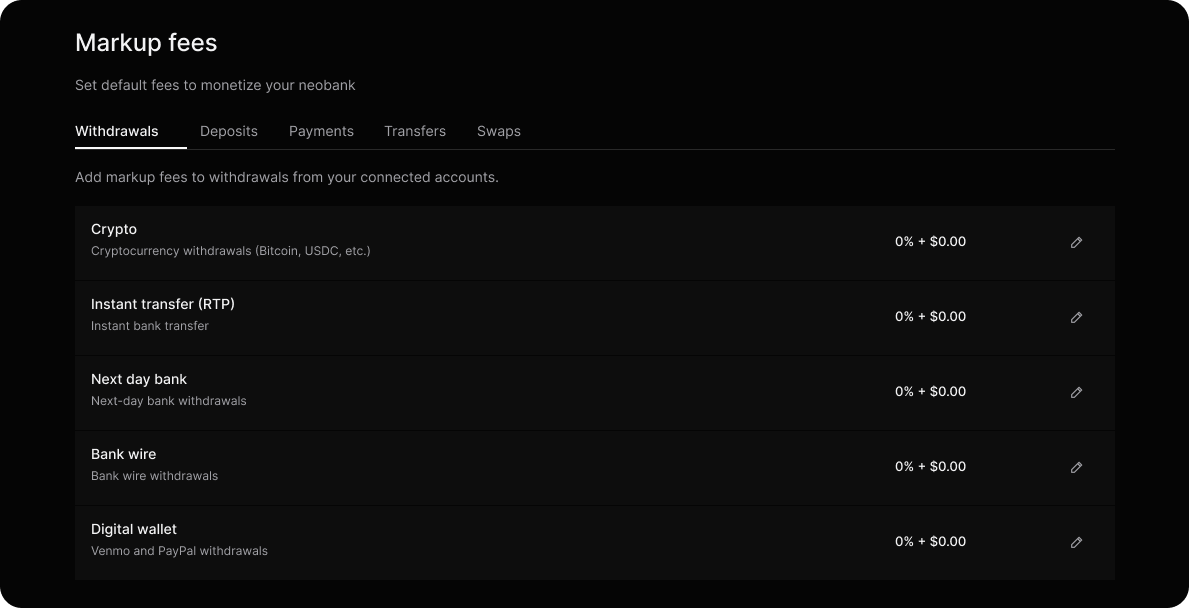
- How you earn: You set fees on deposits, transfers, card spend, and swaps. Whop charges a base fee when money moves; the difference between your fee and their base is your revenue. For example, add $1 to each of 2,000 monthly seller payouts and that is $2,000 a month on money already moving through your platform.
- Customization: Deploy the blueprint, then rebrand with Whop AI (describe your colors and features), edit code directly via the Whop CLI with versioned deploys, or embed individual elements into an existing app.
Tether invested $200 million in Whop in February 2026, which explains the deep stablecoin integration. If you want to try the blueprint yourself, you can get started on Whop here.
Affiliate disclosure: CryptosBeginner may earn a commission if you sign up through this link, at no extra cost to you.
AI-powered option: Bankable Pro
If you want to skip the setup entirely, Bankable Pro is an AI-powered neobank builder created by Zach Russell that runs on Whop's financial infrastructure. You describe the bank you want in plain English (for example, "Create a bank for my local town" or "Sub-accounts for my team with instant transfers"), and the AI agent spins up a working neobank with real accounts, deposits, withdrawals, transfers, and child/sub-accounts. No code, no compliance team, no months of setup.
It is built for indie developers, fintech founders, and anyone who wants to launch a banking product without becoming a bank. Every plan starts with a 7-day free trial, and you can get 20% off your first month with code LAUNCH20. Try it here: Bankable Pro on Whop.
Affiliate disclosure: CryptosBeginner may earn a commission if you sign up through this link, at no extra cost to you.
Step 5: Set your fee structure
Decide what you charge on deposits, payments, transfers, and swaps, against the base fees your infrastructure charges you. Keep fees visible in the activity feed; hidden fees destroy trust faster than high fees do. Model the partner's revenue share (often 20 to 40 percent) into every calculation.
Step 6: Compliance, launch, operate
Before launch: legal review, KYC and AML program configuration, sanctions screening, fraud tooling, and a customer support operation. Budget for ongoing compliance ($500 to $2,000 a month at small scale) and regulatory change. After launch, the unglamorous work is reconciliation: your ledger must match the bank's ledger every day. The Synapse disaster was, at its core, a reconciliation failure.
Realistic costs and timelines
| Approach | Typical cost | Timeline |
|---|---|---|
| Template / blueprint | $25K to $100K | Weeks |
| BaaS-led custom build | $100K to $500K | 3 to 6 months |
| White-label platform | $200K to $800K | 8 to 16 weeks to MVP |
| E-money licensed | $300K to $700K+ plus capital | 6 to 18 months for license |
| Full bank charter | $2M to $20M+ | 18 to 36 months |
Figures compiled from 2026 industry guides and verified October 2026. The most underestimated line items are always the same: KYC at scale, customer support, and user acquisition, which commonly runs $50,000 to $200,000 for the first cohort.
Risks and things to watch
- Partner bank risk: your neobank is only as stable as the licensed institution underneath it. Sponsor banks face regulatory enforcement actions; if yours does, your program can be frozen or forced to migrate. Know your sponsor bank by name.
- Reconciliation risk: your ledger and the bank's ledger must agree daily. The Synapse collapse stranded users for months over exactly this. Own your ledger of record and reconcile continuously.
- Regulatory risk: BaaS regulation tightened significantly after 2024, and crypto features add another layer of scrutiny. Rules differ by country and keep changing; budget for ongoing legal review.
- Unit economics: interchange alone rarely covers costs at small scale, and BaaS revenue shares of 20 to 40 percent compress margins further. Most neobanks need premium tiers or lending to reach profitability.
- Stablecoin risk: crypto neobanks add issuer risk (the stablecoin itself), smart contract risk, and on/off-ramp availability risk. A depeg or frozen bridge becomes your customer support problem.
- Trust deficit: with no branches, trust is built entirely through the app, support quality, and transparency. One hidden fee scandal or outage can undo years of growth.
None of these are reasons not to build. They are reasons to build with your eyes open, starting from a real money flow, with the compliance work treated as product work rather than paperwork.
Related guides
Continue learning with these guides from CryptosBeginner:
- What is Monero? Privacy-focused cryptocurrency explained
- Privacy Coins Hub Compare Monero, Zcash, and other privacy assets
- Non-Custodial Wallets How self-custody wallets work
- Best Crypto Exchanges Compare exchanges for buying crypto
- Fee Calculator Compare trading costs across exchanges
- Crypto Cards Spend crypto with debit cards
Frequently asked questions
What is a neobank?
A neobank is a bank that exists only as an app or website, with no physical branches. Around 90 percent of neobanks do not hold a banking license of their own; instead they partner with a licensed bank that holds customer deposits and provides access to payment rails, while the neobank builds the app, the brand, and the customer experience on top.
Is a neobank the same as a traditional bank?
No. A traditional bank holds its own banking license, takes deposits onto its own balance sheet, and usually operates branches. A neobank typically rents the regulated layer from a licensed partner bank through banking-as-a-service, and focuses on software, design, and serving a specific audience. A challenger bank sits in between: digital-first, but holding its own license.
Are neobanks safe?
It depends on the setup. When a neobank partners with an FDIC-member bank in the US (or equivalent protection elsewhere), customer deposits are generally insured up to the usual limits through that partner. The risk is partner risk: if the banking-as-a-service provider or sponsor bank runs into trouble, customers can face frozen funds and messy migrations, as the Synapse collapse showed. Always check which licensed institution actually holds the money.
What is a crypto neobank?
A crypto neobank is a neobank built around stablecoins and crypto rails alongside, or instead of, traditional banking rails. Users can hold USDC or USDT balances, deposit via bank transfer or on-chain, swap between fiat and crypto, and spend with a linked card. Examples include RedotPay, Gnosis Pay, and newer stablecoin-native players like Plasma One.
How much does it cost to launch a neobank?
A white-label or template-based launch can start around $25,000 to $100,000 and go live in weeks. A custom build on banking-as-a-service infrastructure typically runs $100,000 to $500,000 and takes 3 to 6 months. Getting your own e-money license pushes costs to $300,000 to $700,000 plus regulatory capital, and a full banking charter starts around $2 million and can reach $20 million. Figures verified October 2026.
Do I need a banking license to launch a neobank?
Not necessarily. Most neobanks launch without their own license by using a banking-as-a-service provider and a licensed sponsor bank. You still need a compliance program, KYC and AML processes, and legal review, and your provider will scrutinize your business before onboarding you. This is general information, not legal advice; talk to a fintech lawyer before building.
Sources and further reading
- Whop, "Launch your own neobank in one click" (September 2026): the blueprint concept behind the three-jobs framing used in this guide.
- Our RedotPay review: a stablecoin neobank examined in depth.
- Our privacy coins guide: for the privacy side of digital money.
This guide is educational content, not legal or financial advice. Banking regulation varies by jurisdiction and changes frequently; consult qualified professionals before launching any financial product.
Important disclosure
This guide is for educational purposes only and is not financial, legal, or investment advice. Launching a neobank involves significant regulatory requirements that vary by jurisdiction. Always consult qualified legal and compliance professionals before offering financial services. CryptosBeginner may earn a commission from affiliate links on this page.