Wallet-first DEX
Smart contracts and a connected wallet replace a standard account, but you control approvals and transaction signing.
Privacy-aware comparison · source-backed directory
Compare wallet-first DEXes, P2P markets, atomic-swap protocols, and instant-swap services by what their public information actually says about access, verification, fees, and settlement.
Important boundary
This directory does not certify anonymity, legality, safety, or permanent no-KYC access. “No account,” “no ID in the reviewed flow,” “provider-stated no verification,” and “KYC may apply” are different labels. Providers can change policies or respond to transaction-specific risks.
How to compare
Smart contracts and a connected wallet replace a standard account, but you control approvals and transaction signing.
Offers, payment methods, escrow, and counterparties determine the practical experience.
A deposit address and quote simplify the flow; the provider can still run policy or AML checks.
Some routes begin without documents but can require information for limits, refunds, or compliance review.
Showing 16 of 16 listings
Provider facts reviewed 27 August 2026

1inch Network
A DEX aggregator that searches liquidity across networks and routes swaps through multiple venues.


Aerodrome Finance
A Base-focused liquidity hub for swaps, pools, and protocol-governed markets.
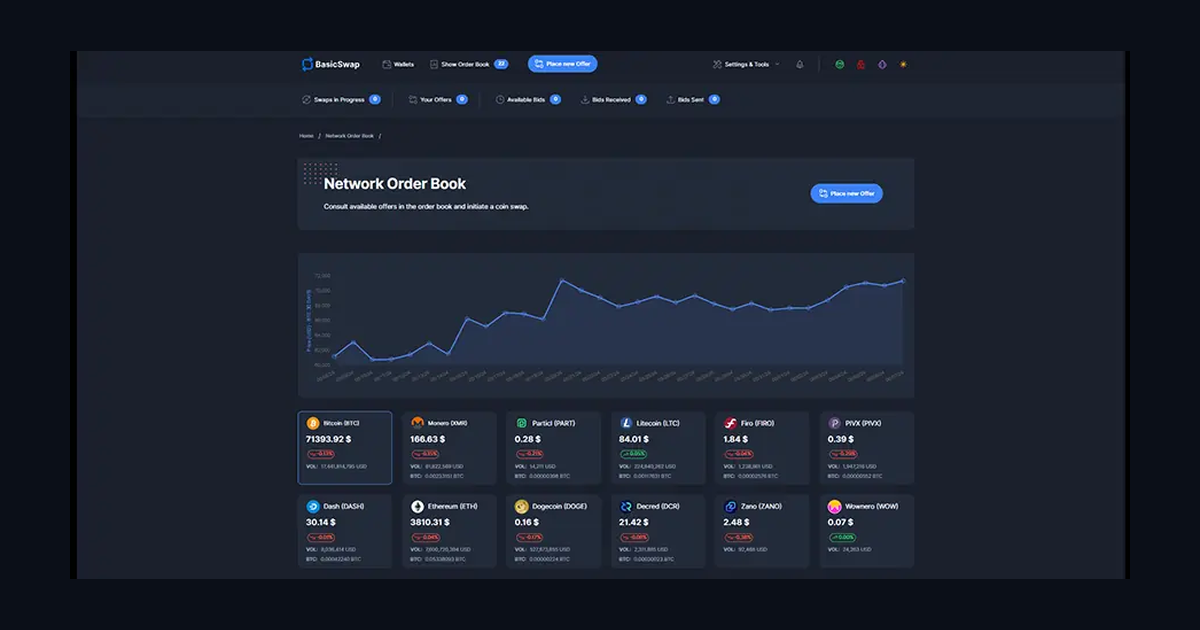

BasicSwapDEX
An open protocol for peer-to-peer atomic swaps across Bitcoin, Monero, and other networks.
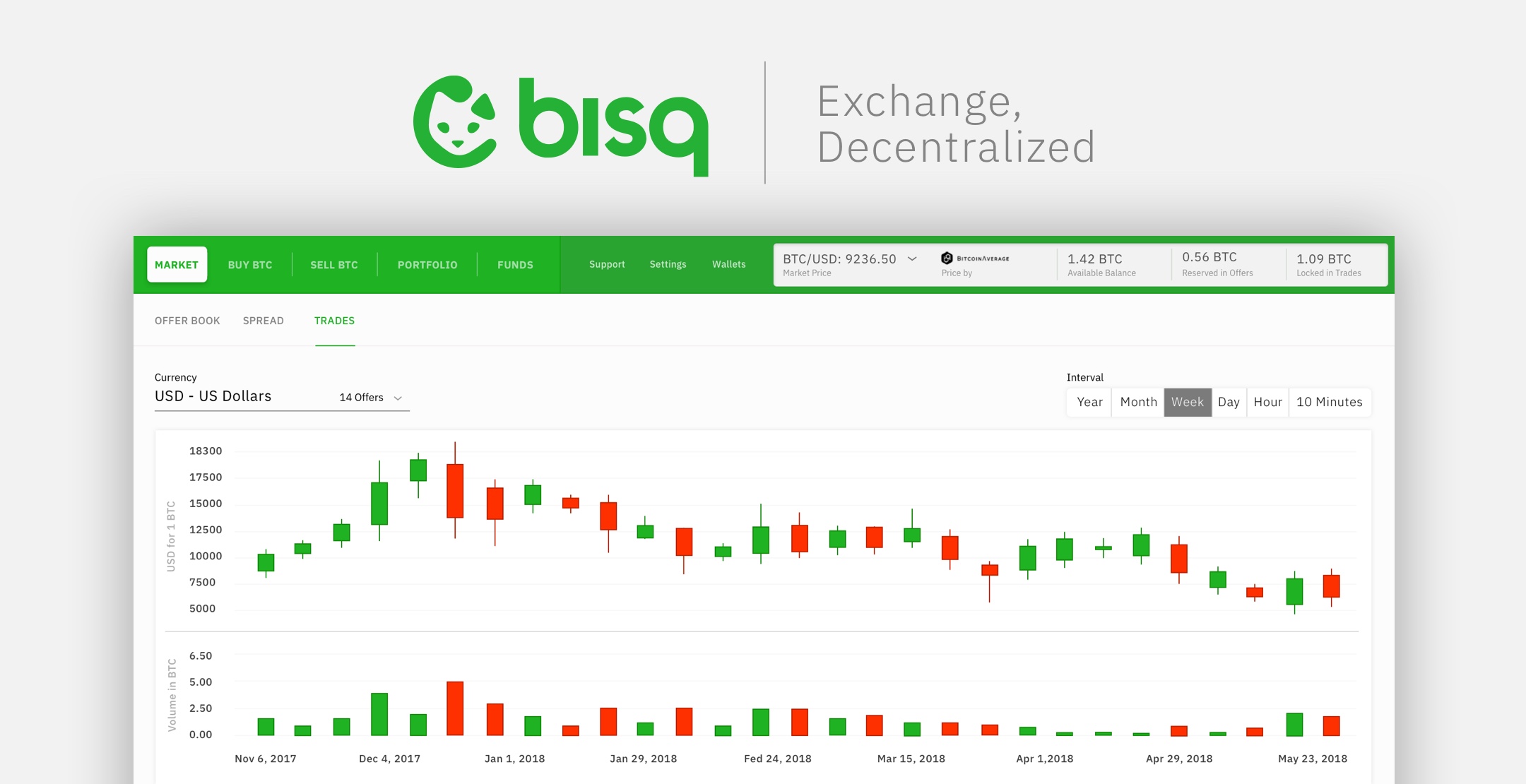

Bisq Network
An open-source desktop P2P network for buying and selling Bitcoin without a central order-matching account.

CoW Protocol / CoW DAO
An Ethereum-focused DEX interface and protocol built around intent-based order settlement and routing.


Curve Finance
A pool-based DEX interface built around Curve’s deployed smart contracts and liquidity markets.
Hodlex Ltd
A non-custodial Bitcoin P2P marketplace using multisig escrow and user-selected payment methods.

Jupiter
A Solana-focused on-chain finance interface with swap routing, perps, lending, and portfolio tools.


OrangeFren
A transaction-first comparison service for instant exchanges and prepaid cards, with privacy-oriented filters.

PancakeSwap
A multichain DEX with swaps, liquidity, bridging, perpetuals, and other on-chain features.
Raydium
A Solana-native DEX interface for token swaps and liquidity markets.

RoboSats
A Tor-oriented Lightning P2P market for exchanging Bitcoin with national currencies.

SideShift.ai
A direct-to-wallet crypto swap service covering BTC, ETH, SOL, and other assets across multiple networks.

Uniswap Labs / Uniswap Protocol
A wallet-connected automated market maker for token swaps across major EVM networks.

ChangeNOW
An instant crypto exchange service with a broad asset list and variable route pricing.

SimpleSwap
An instant crypto swap service with fixed and floating rate paths across a large asset list.
Before using one
FAQ
It describes a provider-stated or observed access path that does not start with the conventional identity-document workflow. It does not guarantee anonymity, permanent access, zero monitoring, or exemption from local law.
No. A DEX usually uses a wallet and smart contracts, while a no-KYC exchange can also mean a P2P market, an instant-swap service, or a limited account tier. Their custody, settlement, liquidity, and counterparty risks differ.
Yes. A provider, payment counterparty, asset route, jurisdiction, volume threshold, refund, or AML review can trigger additional information requests. Check the current terms before depositing or sending funds.
No. KYC status does not determine whether a transaction is taxable, lawful, reportable, or suitable for your situation. Keep records and follow the rules that apply where you live.
Educational comparison only. KYC, AML, limits, fees, availability, taxes, and legal obligations vary by provider, asset, transaction, and jurisdiction.