Trading terminals
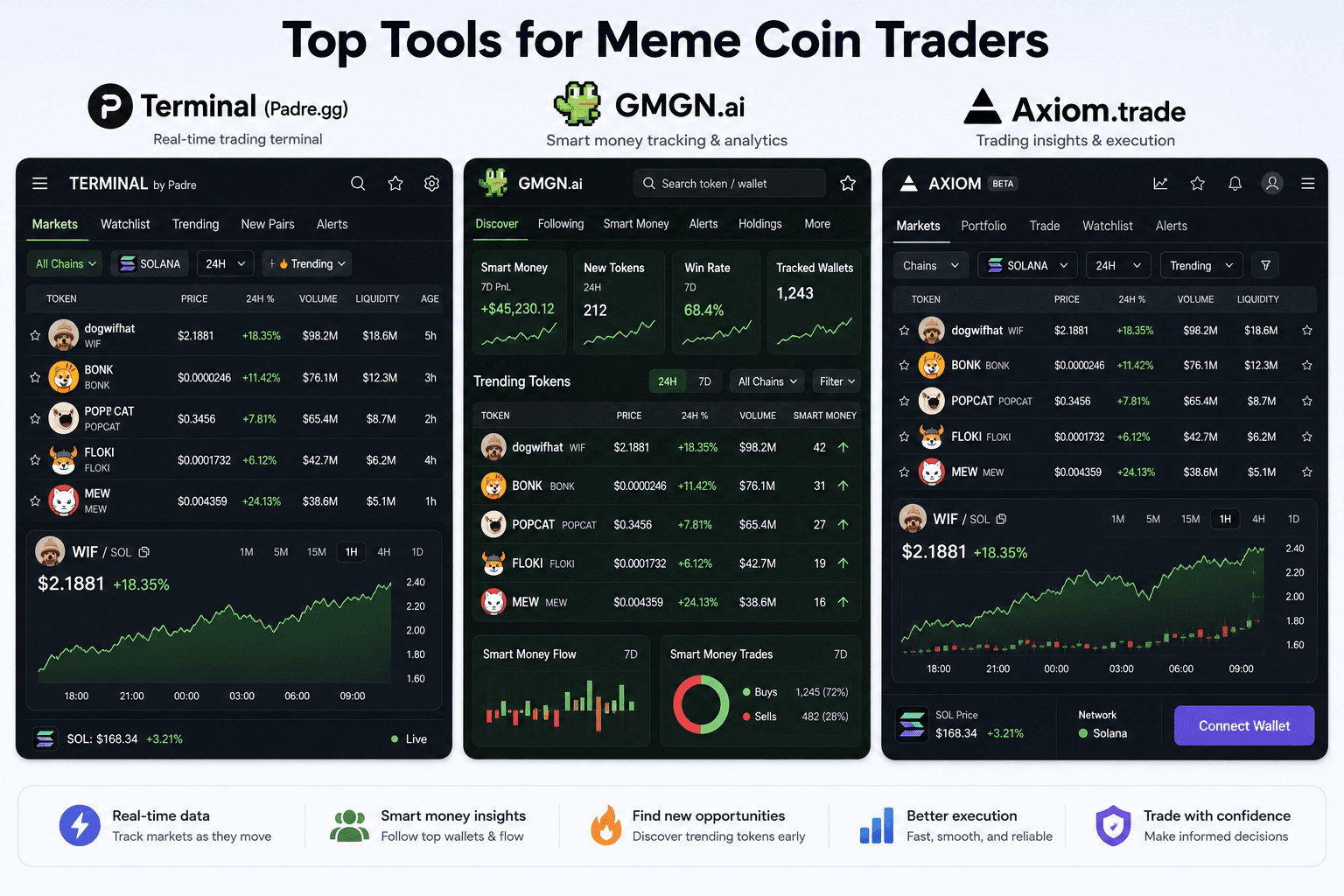
Trading terminals combine discovery, charts, wallet tracking, holder data, alerts, and execution controls. Use them to organize research, not as token-safety scanners.
Examples: GMGN, Axiom, Padre
Meme Coins · Beginner Research Hub
Meme-coin tools can make discovery and execution faster. They cannot prove that a token is legitimate, liquid, sellable, or suitable for your risk tolerance. Start with a repeatable research process before you connect a wallet or sign a trade.
Educational content only. Meme coins are highly speculative and can lose value rapidly. This page does not provide token picks, trading signals, or profit promises.
Start with the job
Most beginner mistakes start with using the wrong tool for the wrong question. A trading terminal may help you monitor and route a transaction. A launchpad may help create or discover a token. A charting tool or blockchain explorer can help verify activity. None of these tools independently validates a meme coin.
Trading terminals combine discovery, charts, wallet tracking, holder data, alerts, and execution controls. Use them to organize research, not as token-safety scanners.
Examples: GMGN, Axiom, Padre
Social feeds, trader profiles, leaderboards, and alerts can surface ideas. Treat activity and displayed P&L as research context because timing, liquidity, and incentives may not be visible.
Example: FOMO
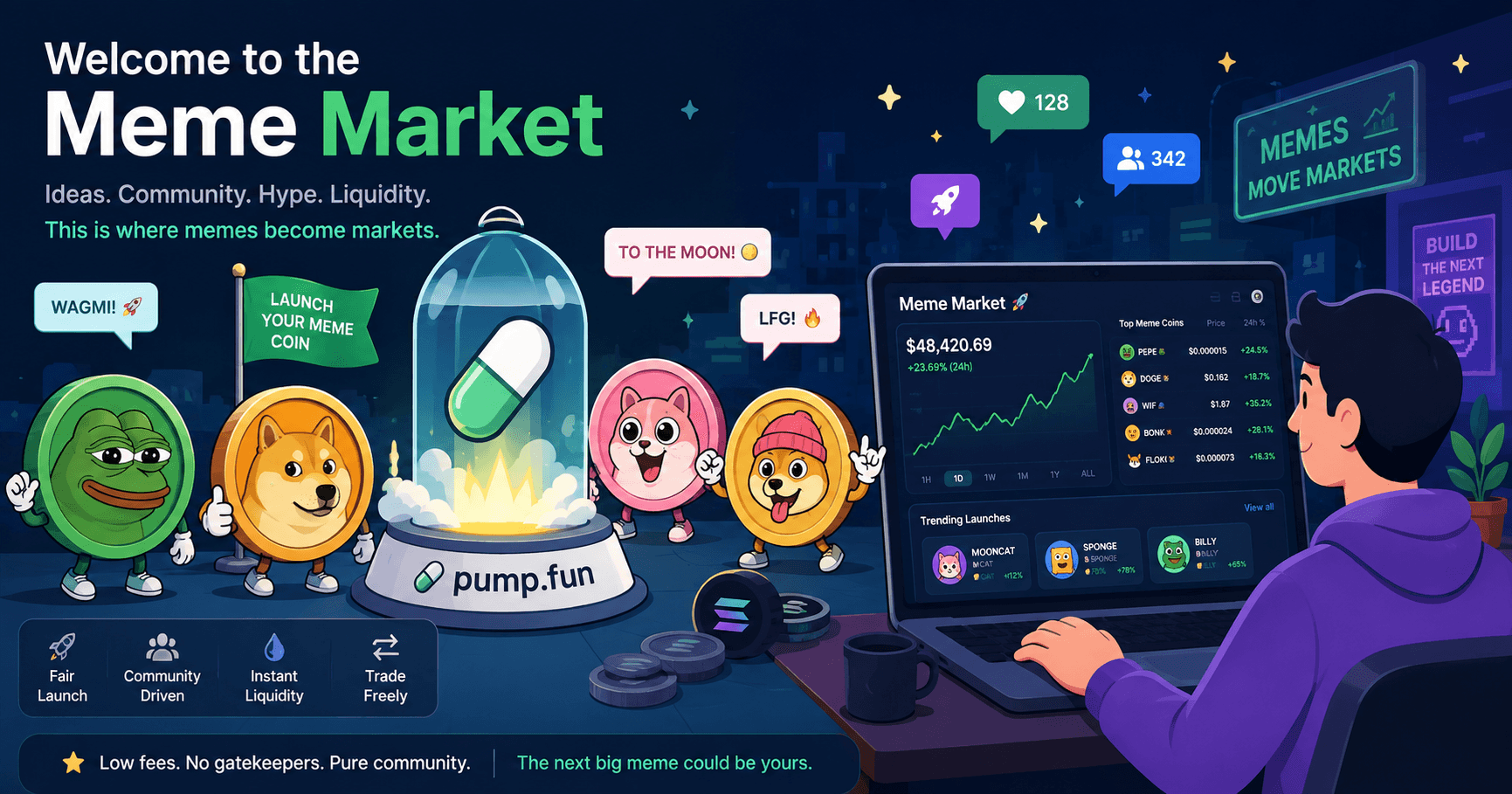
Launchpads reduce the technical steps required to create or discover a token. They may make launching easier, but they do not establish that a token has sustainable liquidity, demand, or safe contract settings.
Examples: Pump.fun, Bags.fm, Four.meme, SunPump
Charts and blockchain explorers help validate addresses, transactions, holder concentration, liquidity activity, approvals, and wallet behavior. They are essential checks before you trust a ticker symbol or social post.
Examples: DexScreener, GeckoTerminal, Solscan, Etherscan
A repeatable process
You do not need to make every decision quickly. A disciplined process creates opportunities to stop before a small mistake turns into a wallet, approval, or liquidity problem.
The key principle
If you cannot verify the address, understand the transaction, or explain how you would exit, you do not have enough information to trade.
Do not rely only on a token name, ticker, logo, Telegram post, or influencer link. Copy the contract address from a trusted source and compare it across an explorer, charting tool, and the token’s official channels.
Look at available liquidity, trade size, price impact, spread, route, and recent transaction activity. A chart can rise quickly while a meaningful sell order still causes major slippage.
Check whether a small number of wallets controls a large share of supply. Research creator, deployer, early buyer, and large-holder behavior instead of treating a holder count alone as proof of decentralization.
Read the wallet prompt. Confirm the destination, token approval, amount, network, route, slippage, and fees. Do not sign a transaction simply because it appears inside a familiar dashboard.
Decide in advance what size you can afford to lose, what would invalidate the idea, and how you would exit if liquidity changes. Avoid treating fast-moving social activity as a substitute for a plan.
New tutorial
Learn how GMGN Skills and the Agent API work, how query access differs from signed trading access, how to protect API credentials, and how to use AI-assisted research without handing over control of your funds.
Reasons to pause
These signals do not automatically prove fraud. They do mean you should slow down, verify more information, use less exposure, or avoid the trade altogether.
Before you sign
A correct token address is not enough if a wallet prompt requests an approval or transaction you do not understand. Review the network, asset, allowance, recipient, route, fees, and slippage before confirming anything.
Quick wallet checklist
Common questions
There is no risk-free way to trade meme coins. A more careful process starts by verifying the exact contract address, checking liquidity and realistic price impact, reviewing holder concentration and wallet activity, and understanding the transaction before signing. If any part is unclear, the safer decision may be to avoid the trade.
No. A terminal can surface charts, wallet activity, holders, liquidity information, and execution settings. It cannot guarantee that a token is legitimate, liquid enough for your trade size, sellable later, or appropriate for your risk tolerance.
Token names, tickers, logos, and social posts can be copied. The contract address identifies the specific on-chain token you are reviewing. Verify it independently before using a chart, terminal, launchpad, or swap interface.
No. Locked liquidity may be one data point, but it does not eliminate risks involving holder concentration, creator behavior, token permissions, supply allocation, impersonation, market manipulation, or the ability to exit a position at a reasonable price.
Treat displayed wallets and leaderboards as research prompts, not trading signals. You may not know when the wallet entered, whether it holds other positions, whether it can exit, whether it uses multiple addresses, or whether incentives affect the displayed activity.
How CryptosBeginner reviews tools
We separate visible product features, provider claims, published fees, and editorial interpretation. Platform pages may use official documentation, product screenshots, supplied videos, and on-chain research references. Features, fees, availability, and legal terms can change, so verify the provider before connecting a wallet or signing a transaction.