Wallets · Updated 2026
Crypto Wallets: How They Work and Which Type to Use
Wallets do not store coins, they store keys. Understanding the difference between hot and cold, hardware and software, custodial and self custody is the starting point for staying safe.
What is a crypto wallet really?
A wallet is a tool that manages your private keys and signs transactions. Coins themselves sit on blockchains as balances attached to addresses. When you “send” crypto, your wallet signs a transaction that tells the network to move value from one address to another.
This is why losing a recovery phrase or exposing private keys is fatal. Anyone who gets those keys can sign transactions as if they were you and empty the wallet.
Main wallet types and how they differ
Custodial vs self custody
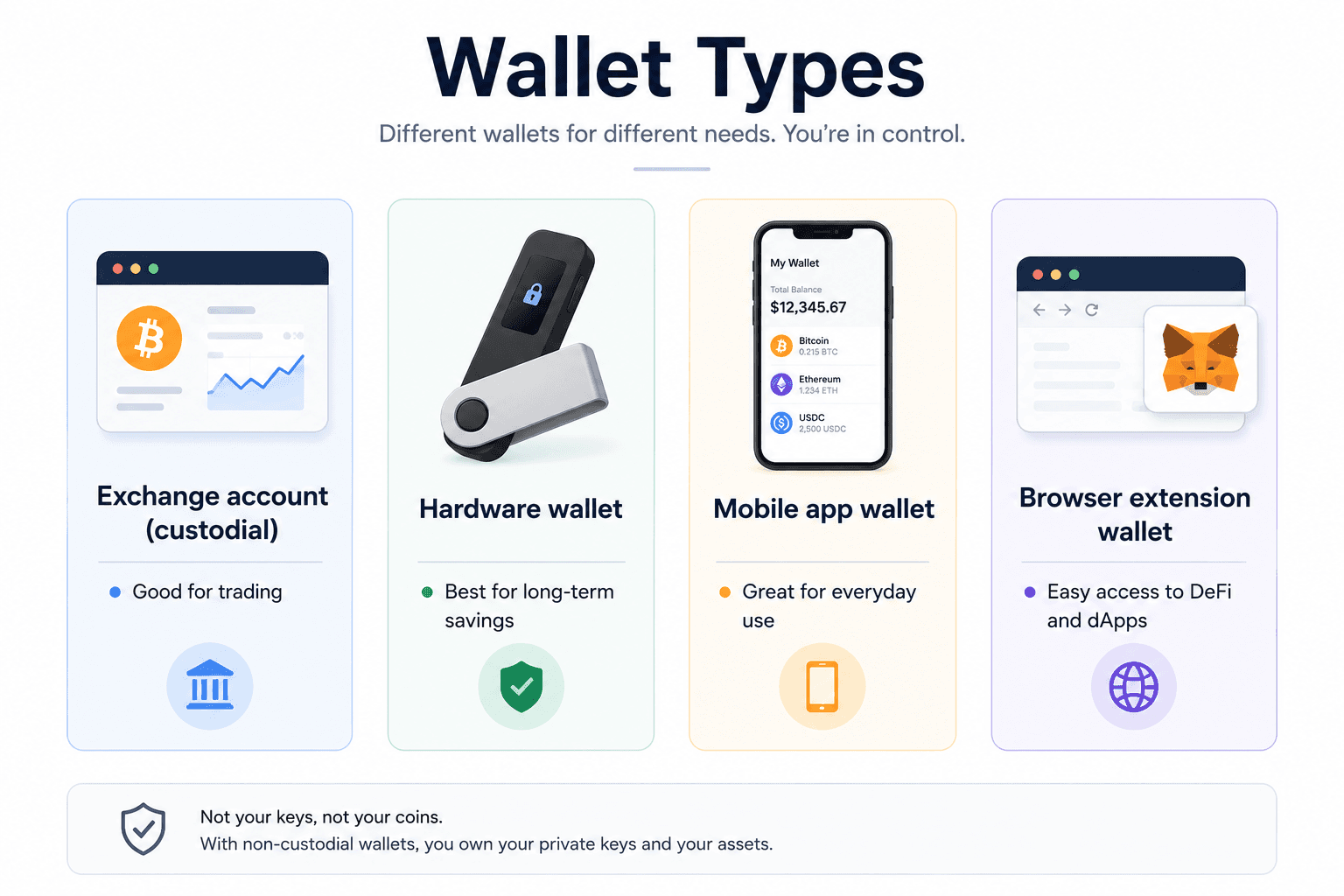
- Custodial wallets are exchange accounts. The company holds the keys and you log in with email and password.
- Self custody wallets give you a recovery phrase or key file. You are responsible for security and backups.
Hot vs cold storage
- Hot wallets stay connected to the internet. They are convenient for everyday use but exposed to more attack paths.
- Cold wallets keep keys offline. They are slower to use but much safer for long term holdings.
Hardware vs software wallets
Hardware wallets
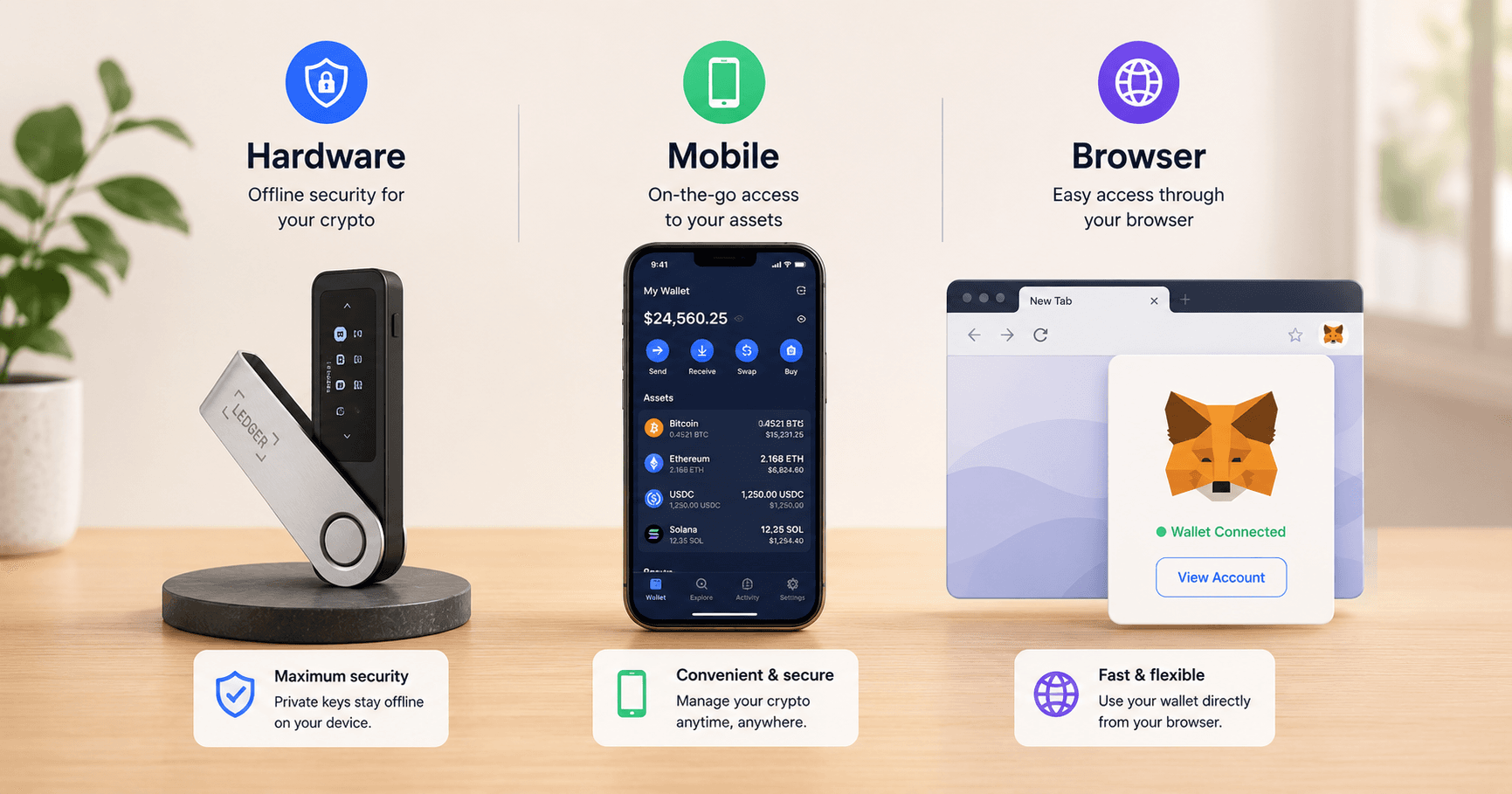
Hardware wallets are dedicated devices that store keys in secure chips and sign transactions on the device. Brands such as Ledger and Trezor are widely used by long term holders who want to keep keys off phones and laptops.
They are not perfect. Past incidents have shown data breaches and firmware bugs that affected users, which is why you should buy only from official sources and keep recovery phrases entirely offline.
Software and mobile wallets
Software wallets run as apps on your phone or browser. Examples include MetaMask and mobile wallets such as SafePal. They are ideal for DeFi, NFTs and everyday on-chain activity but depend heavily on device security and app hygiene.
For many people, a simple pattern works: mobile wallet for small spending, hardware wallet for savings and exchange account for short term trading.
Fun facts and real incident lessons
- Early exchange failures like Mt. Gox pushed many people toward self custody and hardware wallets.
- Data leaks at wallet companies have shown that even marketing databases are sensitive, because they reveal who owns hardware wallets.
- Firmware bugs can affect randomness or signing logic, reminding users that large holdings deserve defence in depth, not one device alone.
You can explore individual incidents on our security incidents timeline to see how different wallet and exchange failures unfolded.
Simple wallet plan for beginners
Trade on a reputable exchange with strong security, withdraw medium and long term holdings to a hardware wallet, and keep recovery phrases in offline backups.
Educational content only. Not financial or security advice. Think carefully about where you keep keys and what would happen if a device or backup failed.