Tools · trading terminals
Padre (Terminal) review 2026: the terminal Pump.fun bought
Updated 15 October 2026 · Tested on the live app for CryptosBeginner
Flat 1% fees, real SOL cashback, sub-second execution, and a token story you need to hear before you touch it. Tested screen by screen, here is the honest breakdown of Padre, now called Terminal after the Pump.fun acquisition.
Alex Rivera · Crypto researcher, CryptosBeginner
Every review is research-led: specs, fees, and availability are checked against official sources before publication and re-checked on every update. Affiliate links never influence verdicts. Last reviewed 15 October 2026.
Padre Terminal video review
Video review coming soon. The full walkthrough is being finalized and will be embedded here.
What Padre (Terminal) is
Padre started around 2024 as an independent trading terminal for meme coins and small-cap tokens. On 24 October 2025, Pump.fun acquired it for an undisclosed sum and rebranded it as Terminal, though it still lives at trade.padre.gg and is mirrored at terminal.pump.fun. It runs under its own brand with its own operating company named in the terms.
The pitch is simple: a multi-chain on-chain terminal with a CEX-style order panel, built for traders who live in the trenches. Solana is where it is most optimized, but it also covers Ethereum, Base, and BNB Chain. The team leans into the trader-forged branding, and Pump.fun co-founder Alon Cohen publicly praised their execution at the acquisition.
The one thing to know before anything else
Your cashback rate is decided the moment you sign up, based on whether a referral code was in your browser. It cannot be changed later. If you plan to use Padre, sign up through a referral link on day one or you leave real money on the table forever.
Getting set up: wallets, password, gas first
You can sign in with Telegram, Google, or X, or import an existing wallet via private key. Padre then generates a trading wallet encrypted with a password you set. The app says it never stores that password, and you can export your private keys at any time, which is the right trust model for a trading terminal.
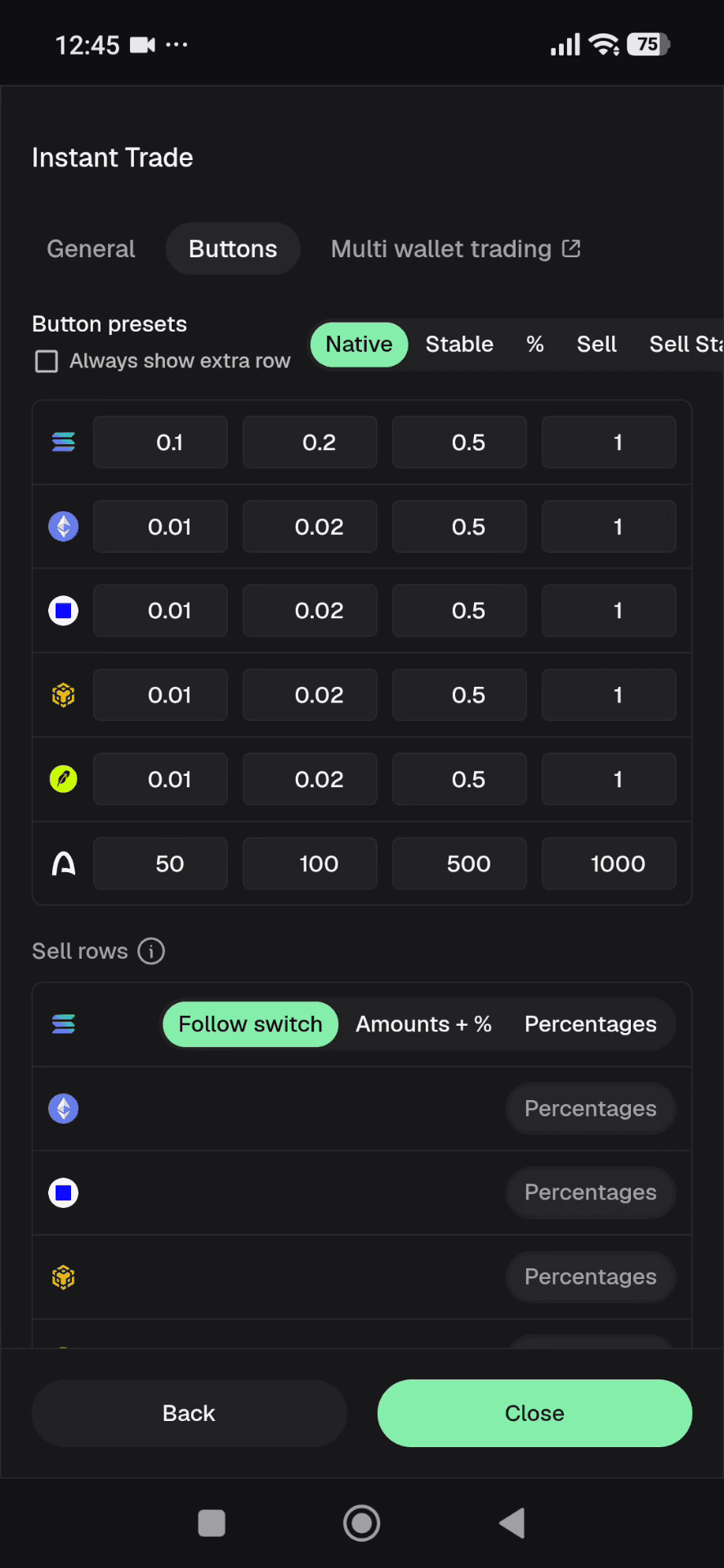
The settings screen is where you configure slippage, priority fees, and trading presets. Take this seriously before your first trade, because the defaults are not built for sniping new launches.
Fund your gas token first
A documented community case: a user deposited only USDT, then could not trade or withdraw because they had no SOL for gas, and support was slow to respond. The fix was exporting the key to Phantom. Do not be that person. On every chain you trade, hold the native gas token before you deposit anything else.
Fees: the honest math
The platform fee is 1% per trade, flat, on buys and sells. This is confirmed in the app's own code (feeBps: 100), with no volume tiers and no discount tables. Some guides report 0.5% on limit orders, but we could not confirm that in the code, so plan around 1% flat.
On top of the platform fee, you always pay network gas, your own priority fee or Jito tip, and slippage. On Pump.fun bonding curve trades, Pump.fun's separate 1.25% bonding curve fee also applies. These stack, so your true cost per trade is the 1% platform fee plus everything else.
| Cost | $500 market buy | $1,000 market buy |
|---|---|---|
| Padre platform fee (1%) | $5.00 | $10.00 |
| Cashback at 35% referral rate | -$1.75 in SOL | -$3.50 in SOL |
| Effective platform cost | $3.25 | $6.50 |
| Plus gas, priority fee, slippage | Varies by network conditions | |
The hidden cost most traders miss is failed transactions. New launches fail constantly, and every failed attempt still costs you the priority fee. At 0.01 SOL per attempt, five failures burn 0.05 SOL (around $7.50 at $150/SOL), more than the platform fee on a successful $500 trade. That is why the snipe preset matters: slippage 15 to 25%, high priority fee, small size until you see the first one land.
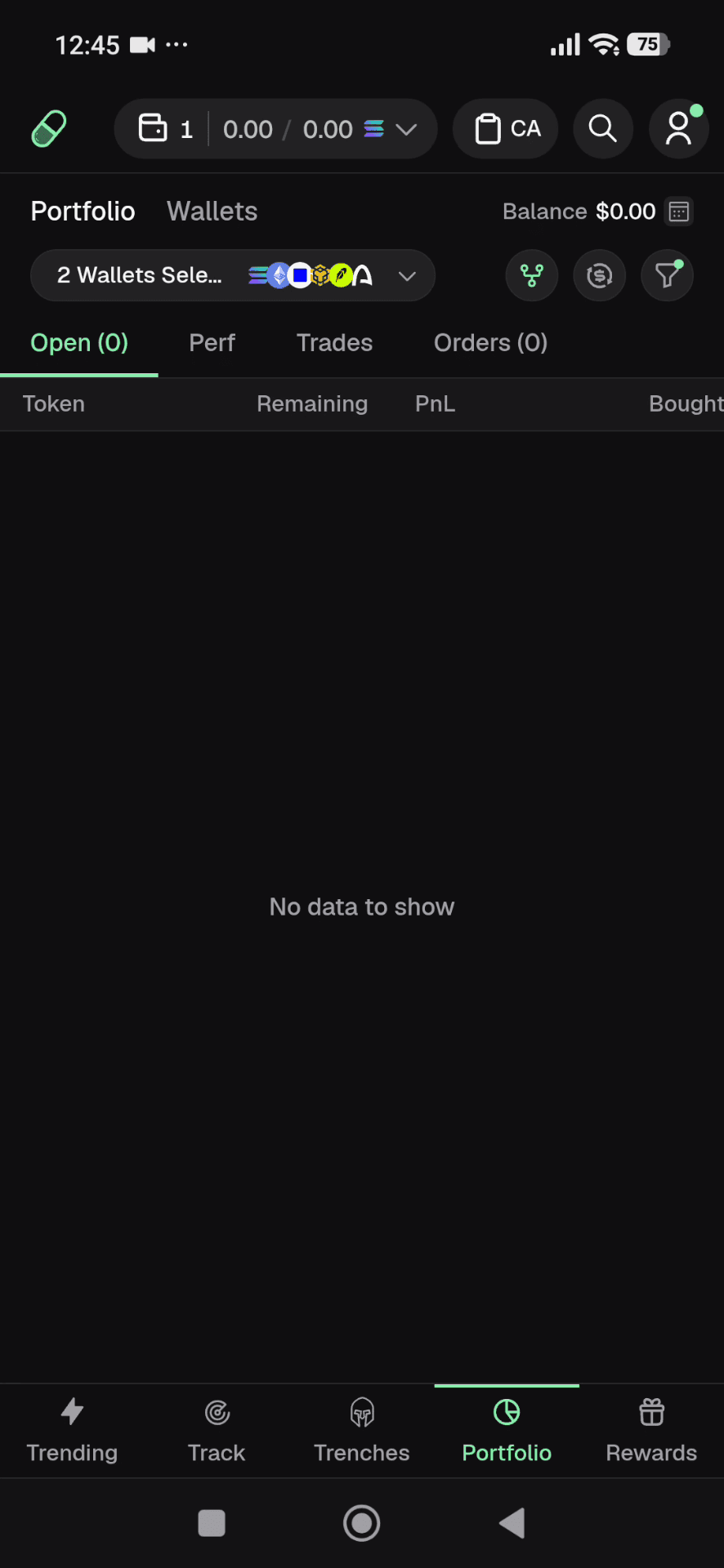
Cashback in SOL: how it actually works
Cashback is a rebate against the 1% platform fee, paid in SOL, not points. You claim it from the Rewards page, where an unclaimed balance accrues per trade. Accounts created through a referral link earn up to 35% cashback on their own fees. The live in-app copy confirms the 35% figure.
Direct signups earn 10% cashback on their own fees. The rate is fixed at signup by whether a referral code was stored in your browser, and it cannot be changed later. Do not sign up directly planning to add a referral code later. It will not work.
On the referrer side, the in-app referral dashboard says referrers earn up to 40% of the fees from their referred traders' volume, excluding gas and taxes. Other sources cite 35% as the starting commission, so treat the exact tier as variable.
The trading interface
The terminal gives you market and limit orders on all chains, plus stop-loss, take-profit, trailing stop-loss, and multi-exit plans (for example, sell 25% at +30%). Position-based take-profit and stop-loss scale with your holdings, and there are pre-migration limit orders for Pump.fun tokens about to graduate to Raydium. Custom trading presets let you switch slippage and tip profiles in one click.
The layout is customizable, charts are TradingView, and there is hotkey search. It is a serious terminal, and the learning curve is real. If you have never used a trading terminal before, expect to feel overwhelmed for the first hour.
Inferno Mode: the speed pitch
Inferno Mode is Padre's headline feature: it fires multiple simultaneous transactions and the fastest one wins, with fills cited around 300 milliseconds even in congestion. That is the core reason high-volume traders stay. Note the tradeoff flagged by rival comparisons: priority tips are charged on all sent transactions, not just the one that lands, so Inferno Mode costs more in tips during failed attempts.
There is also anti-MEV protection and transaction simulation, though MEV protection is reportedly not available on Base. Solana-first optimization means the EVM chains get less love.
Discovery: trending and the Trenches
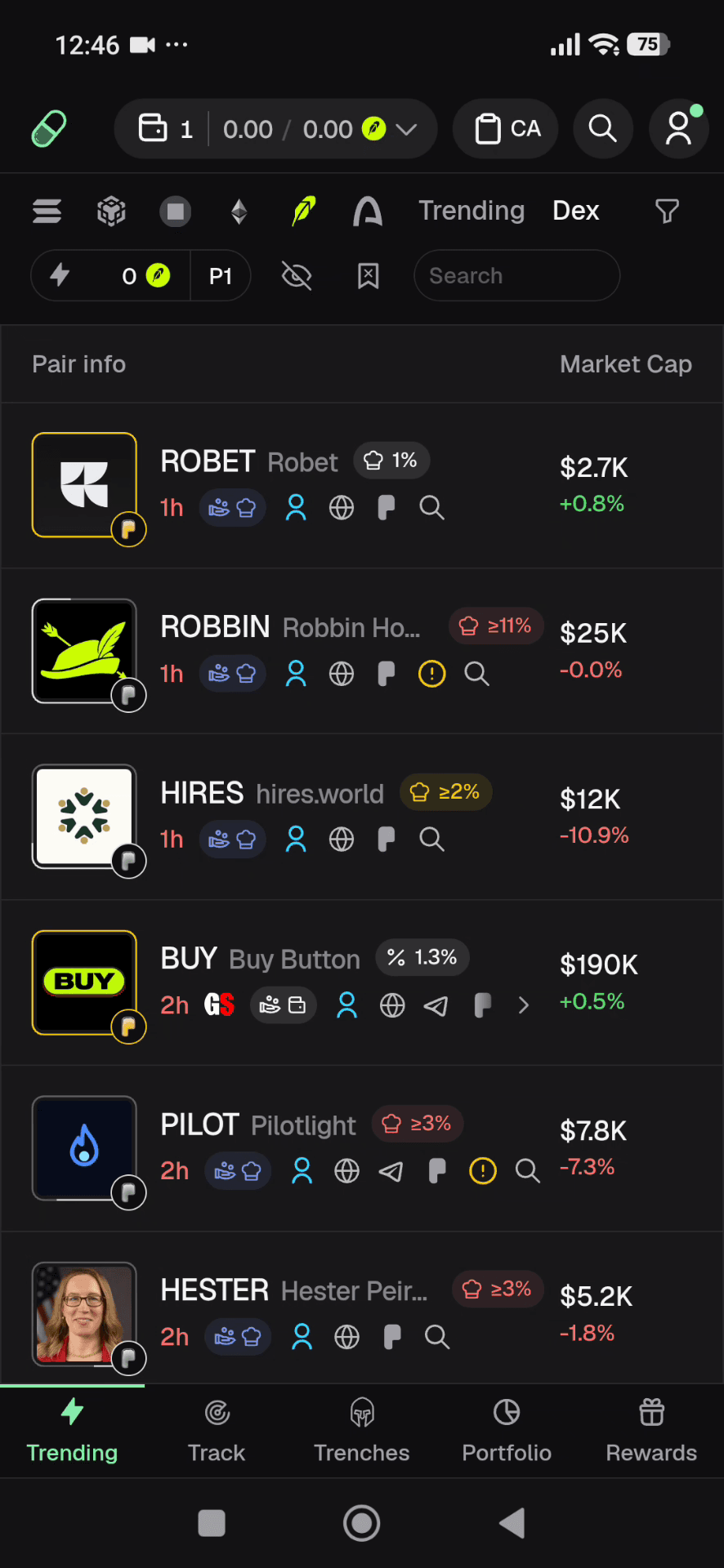
The trending view ranks tokens by real activity across all four chains. This is your morning scan: what is moving, what is new, where the volume actually is. Forty seconds here replaces an hour of scrolling social media.
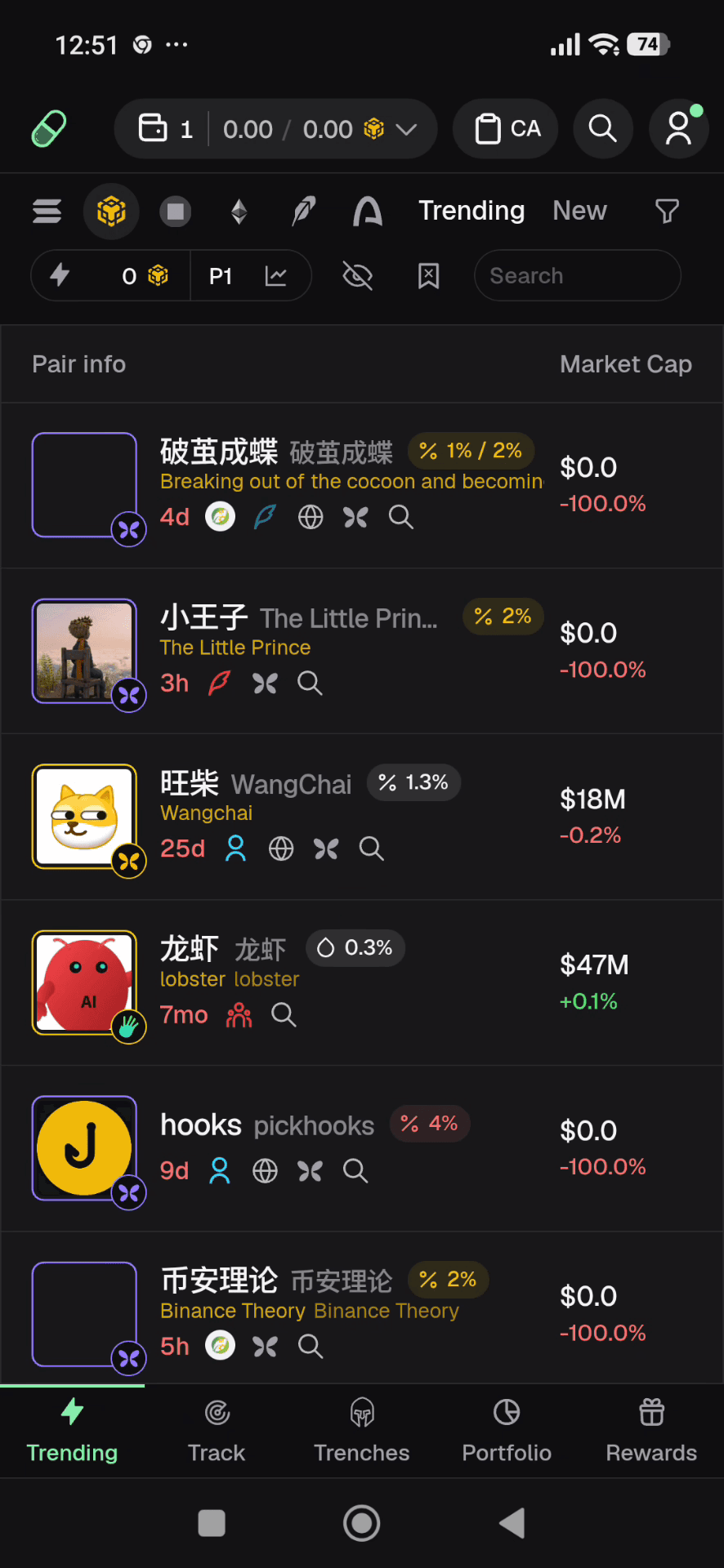
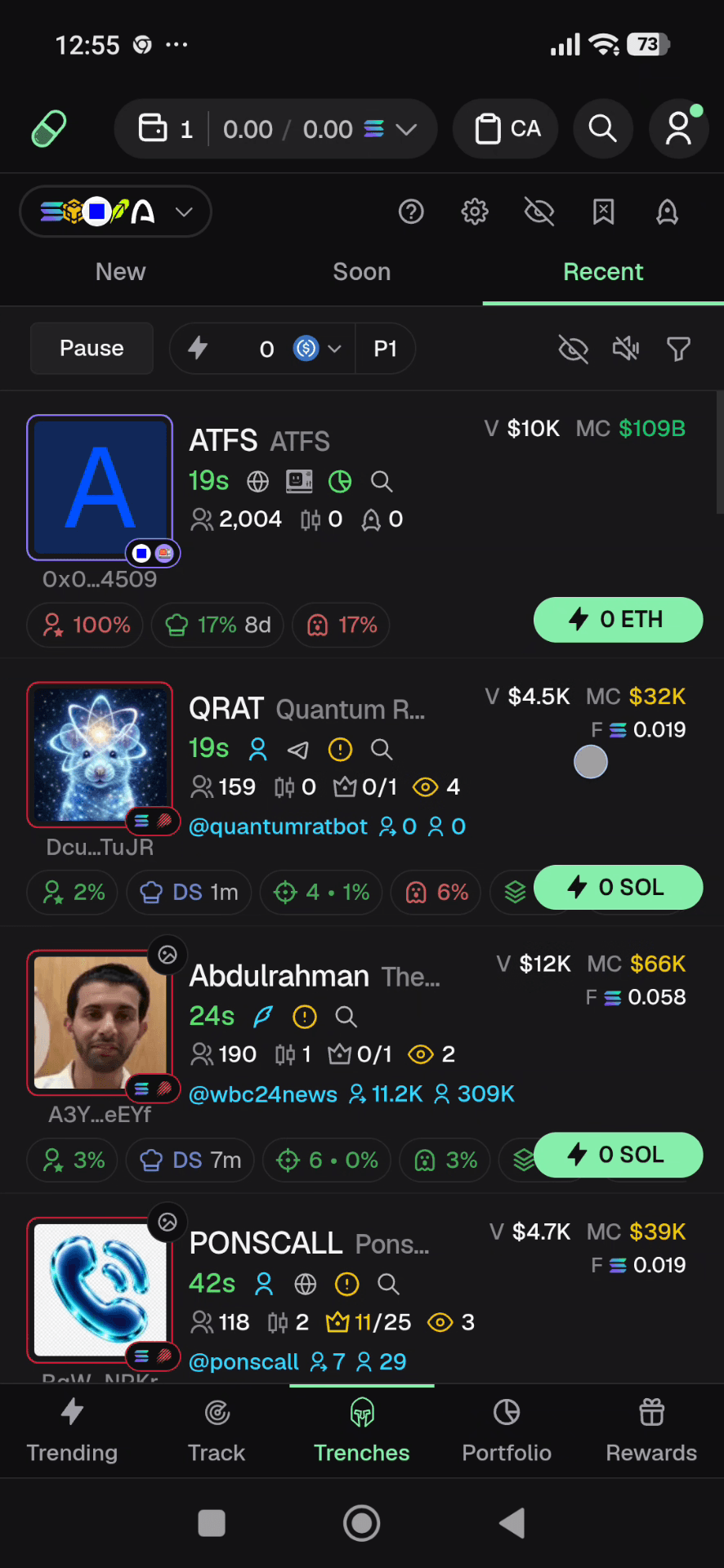
The Trenches page is the bonding-curve view: live Pump.fun launches with Almost Bonded sorting and dev-signal and liquidity filters. The filters panel runs deeper than it looks. Filter by migration status, protocols, audit results, metrics, and socials. You can build a view that only shows migrated tokens with clean audits and real socials, for example. Most users never touch these. The ones who do stop drowning in noise.
Token pages: audits, Jeet Grid, holder clusters
Click any token and you get the full terminal view: chart, orders, holders, transactions. The relationship mapping traces connections between wallets, showing proxy nodes and intermediary wallets. When a token's holders are all connected to each other, that is not a community, that is a coordinated group. This view exposes it in seconds.
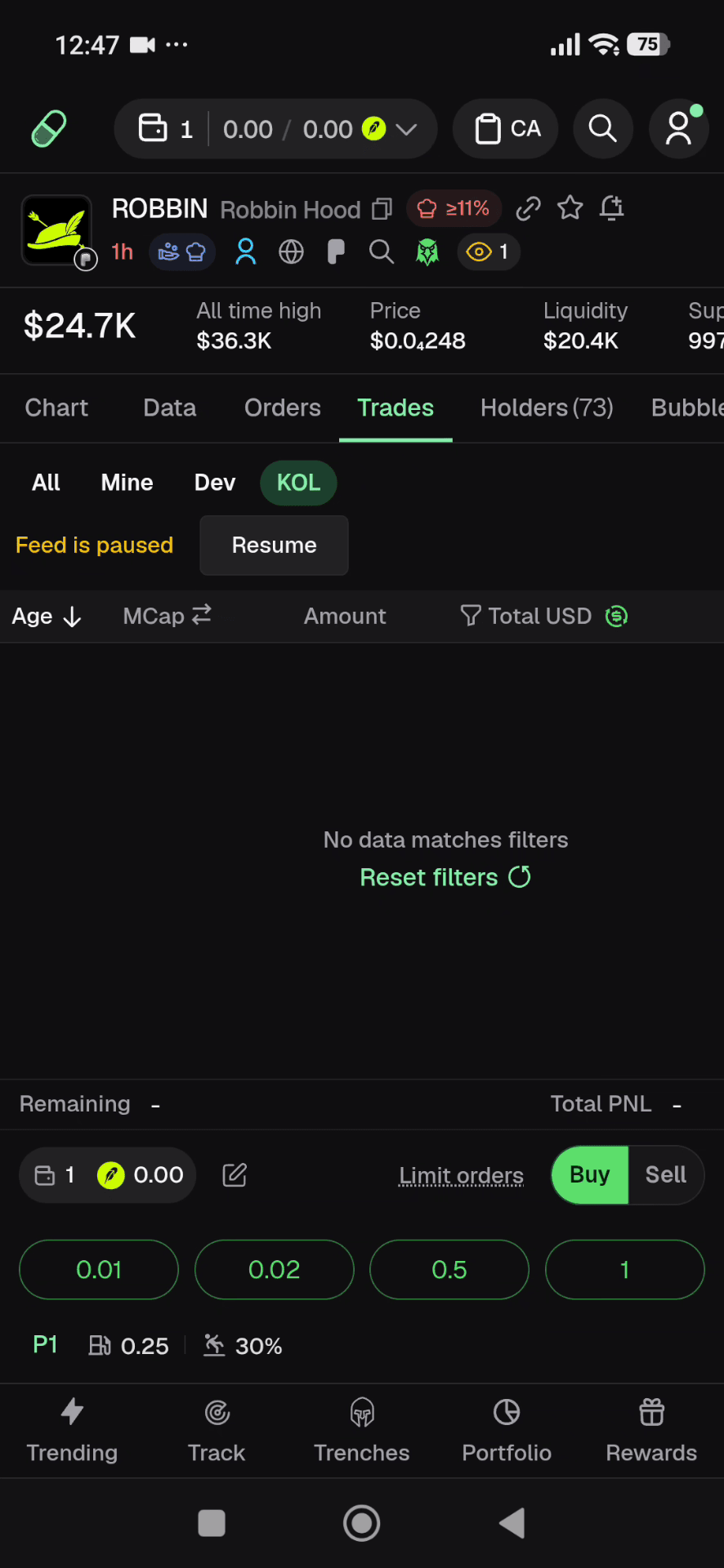
The safety layer is Quick Intel: contract audits right on the token page, flagging freezable tokens, dev allocation, and revocable permissions before you spend a cent. The panel itself warns that audits are not 100% accurate, which is honest. No audit catches everything, but going in blind when this exists is a choice.
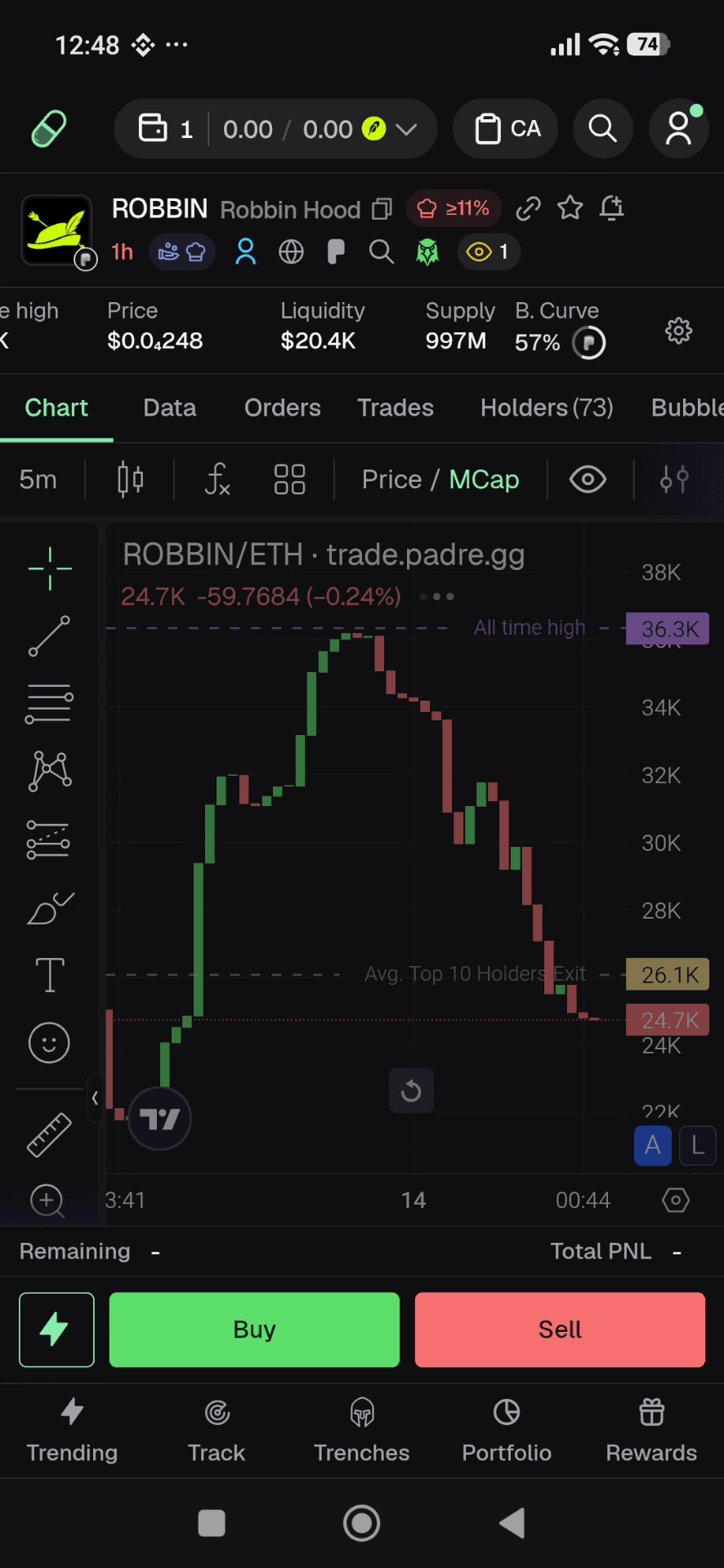
The Jeet Grid visualizes early-holder behavior as color-coded squares: red for wallets that fully exited, blue for wallets that accumulated, purple and yellow for transfers and partial sells. It answers one question fast: is this dip a buying opportunity or the start of a slow dump?
The clusters view breaks holders into groups: deployer address, market makers, hidden wallets, each with their percentage. If a couple of clusters control the supply, you are not trading a market, you are playing someone else's exit liquidity. Ten seconds here saves you from the most common memecoin death.
Wallet tracking and the X Tracker
This is the feature that keeps people here. Follow thousands of wallets, and their buys and sells plot directly on your charts. See a wallet with a real track record accumulating? You see it live. The tracked wallets view ranks them by PnL, so you are following proven winners, not loud accounts. In memecoins, information is the entire edge, and this is the closest thing to seeing everyone's cards.
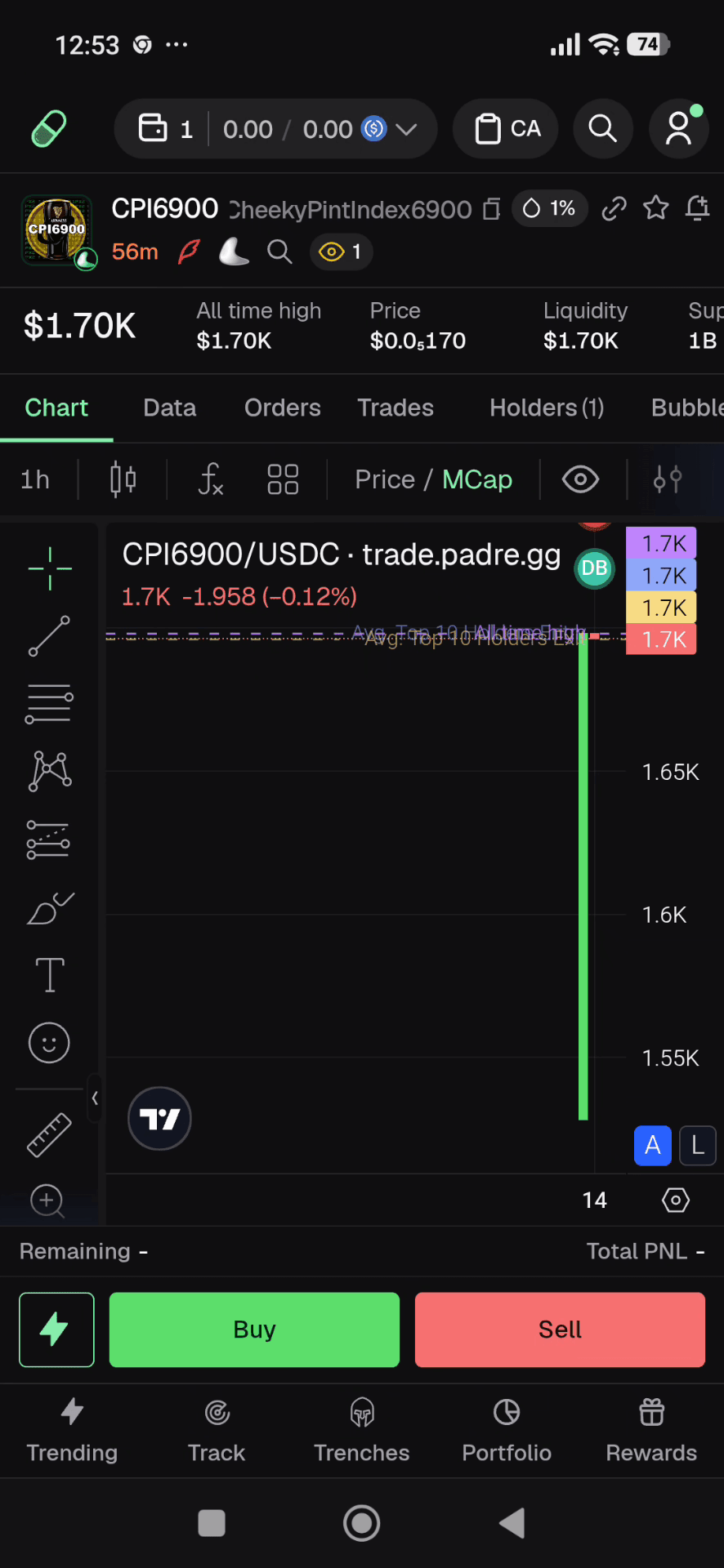
The X Tracker links X (Twitter) accounts to wallets, so when an influencer calls a token, you can check whether their wallet actually bought it or dumped into their own call. Import tracked accounts, build your list. This is how you separate signal from shill. If someone's calls do not match their chain activity, you unfollow with confidence.
There is also an Alpha Tracker that aggregates calls from paid alpha groups onto the chart, so you can see group calls against price action in one view.
Portfolio and PnL
The portfolio view tracks everything across your wallets: balances, realized PnL, and performance charts. Clean, honest numbers with fees included, so you always know what you actually made versus what the chart says you made.
How to get started, step by step
1. Open Padre through a referral link first, before anything else. Your cashback rate locks at signup, and this step cannot be done later. 2. Sign in with Telegram, Google, or X, or import an existing wallet. 3. Set your wallet password and export your private keys somewhere safe immediately. 4. Deposit the native gas token of the chain you will trade (SOL for Solana) before depositing anything else. 5. Configure your trade settings: set a snipe preset (slippage 15 to 25%, high priority fee, small size) and an established-token preset (low slippage, low tip). 6. Start with the trending view and the thirty-second audit ritual: liquidity, holders, clusters, Quick Intel.
What it lost after the acquisition
Two features were removed after Pump.fun took over: copy trading and automation. If you wanted to follow top traders automatically, that is gone, and Axiom and GMGN still have it. There are also no perps, no DCA, and no native mobile app. It is a web app you install as a PWA, with phone sign-in via QR code from your desktop session.
The post-acquisition roadmap is also a genuine unknown. Pump.fun's backing brings ecosystem integration and deep pockets, but the docs are thinner than competitors and the future development direction is unclear. That is not a reason to avoid it, but it is a reason to keep your keys exported and your funds in a dedicated trading wallet.
The $PADRE token story, told honestly
$PADRE was an ERC-20 token on Ethereum with a 100 million max supply, raised in a token sale on Fjord Foundry in early 2024. Its utility was fee discounts, token-gated features, and holder rewards. Then the acquisition happened.
On 24 October 2025, Pump.fun declared that PADRE would no longer have utility on the platform, with no further plans. The token crashed roughly 78 to 80 percent within hours. Holders called it a rug pull, alleged promised revenue sharing and buybacks that never materialized, and some claimed critics were banned from the Discord. Two days later, Pump.fun promised PUMP token compensation at the pre-announcement PADRE value, with a snapshot on 24 October 2025 and a claim deadline of 30 December 2025.
The terminal itself kept running and kept its speed. But the lesson stands: do not buy $PADRE expecting perks, discounts, or a comeback. As a utility token it is effectively dead, down around 97% year over year. Any review that presents PADRE holder benefits as live is lying to you. This one is not.
Padre vs Axiom vs GMGN vs Photon vs BullX
| Feature | Padre | Axiom | GMGN | Photon / BullX |
|---|---|---|---|---|
| Base fee | 1% flat | ~1%, tiers to ~0.75% | 1.5% | 1% |
| Cashback | Up to 35% in SOL via referral | Volume tiers + referral discount | None | None |
| Chains | SOL, ETH, Base, BNB | SOL, ETH, BNB | Multi-chain | Multi-chain |
| Copy trading | Removed post-acquisition | Yes | Yes | Yes (BullX) |
| Perps | No | Yes (Hyperliquid) | No | No |
| Speed claim | Inferno Mode, ~300ms | Sub-second, volume leader | Fast | Fast |
| Backing | Owned by Pump.fun | Y Combinator-backed | Independent | Independent |
Padre's edge is speed plus real SOL cashback. Axiom is the volume leader with deeper features like perps and copy trading. GMGN wins on smart-money analytics but charges the highest fee at 1.5%. Photon and BullX are solid 1% alternatives without cashback. Pick based on what you actually do: sniping speed (Padre), feature depth (Axiom), or research analytics (GMGN).
Pros and cons
What stands out
- Inferno Mode execution, ~300ms fills in congestion
- Up to 35% cashback in SOL, real money not points
- Deep order types: trailing stops, position-based exits
- Wallet tracking on thousands of wallets, plotted on charts
- EVA audits, Jeet Grid, holder clusters, X Tracker
- Self-custodial with exportable keys
What to watch
- 1% flat fee is high vs Axiom's effective rate
- Copy trading and automation removed post-acquisition
- Cashback rate locked at signup, no second chances
- Steep learning curve for beginners
- $PADRE token utility killed, trust dent from 2025
- No perps, no DCA, no native mobile app
- MEV protection gaps on Base
Verdict
Padre is a serious terminal for serious traders, not a beginner's first app. The speed is the pitch: Inferno Mode around 300ms fills when congestion kills everything else. The SOL cashback is real money that narrows the 1% fee gap if you trade size, but only if you sign up through a referral link, because that rate locks forever. The analytics stack, wallet tracking, EVA audits, Jeet Grid, holder clusters, is genuinely deep.
The honest downsides: the fee is high next to Axiom's effective rate, copy trading is gone, the learning curve is steep, and the $PADRE token saga left a trust dent that Pump.fun's ownership has not fully repaired. If you are a high-volume Solana trench trader who values execution speed above everything, it belongs on your shortlist. If you are new, learn spot trading basics on something simpler first.
Frequently asked questions
What is Padre (Terminal)?+
Padre, now branded as Terminal after its acquisition by Pump.fun in October 2025, is a multi-chain trading terminal for meme coins and small-cap tokens. It runs as a web app with a CEX-style order panel, covering Solana, Ethereum, Base, and BNB Chain. It is built for high-volume traders who want execution speed, deep order types, and on-chain analytics in one interface.
How much does Padre charge per trade?+
Padre charges a flat 1% per trade, confirmed in the app's own code (feeBps: 100), with no volume tiers. Some guides report 0.5% on limit orders, but we could not confirm that in the code, so treat the 1% flat rate as the number to plan around. On top of the platform fee you also pay network gas, your own priority fee, slippage, and on Pump.fun bonding curve trades, Pump.fun's separate 1.25% curve fee.
How does the SOL cashback work?+
Cashback is a rebate on the 1% platform fee, paid in SOL and claimed from the Rewards page. Direct signups earn 10% cashback on their own fees. Accounts created through a referral link earn up to 35%. The rate is fixed at signup and cannot be changed later, so use a referral link before you register.
Why is my cashback rate locked at signup?+
The app decides your rate based on whether a referral code was stored in your browser when you first landed on the site. That decision is permanent. If you sign up directly and later find a referral link, you cannot upgrade your rate. This is the single most important thing to know before creating an account.
Is Padre self-custodial?+
Yes. Padre generates a trading wallet encrypted with a password you set, which the app says it never stores, and you can export your private keys at any time. You can also sign in with Telegram, Google, or X, or import an existing wallet. Because the app needs to sign transactions on your behalf, use a dedicated trading wallet and never your main holdings.
What happened to the $PADRE token?+
When Pump.fun acquired Padre in October 2025, it declared the $PADRE token would have no further utility on the platform. The token crashed roughly 78 to 80 percent within hours, and holders accused the team of a rug pull. Pump.fun later offered PUMP token compensation at the pre-announcement PADRE value, with a claim deadline of 30 December 2025. As a utility token, $PADRE is effectively dead. Do not buy it expecting fee discounts or perks.
Does Padre have copy trading?+
No, not anymore. Copy trading and automation existed before the Pump.fun acquisition and were removed afterward. If copy trading matters to you, Axiom and GMGN still offer it. Padre's edge is execution speed and analytics, not automation.
Is there a Padre mobile app?+
There is no native iOS or Android app. Padre ships as an installable progressive web app (PWA) with full desktop parity, and you can sign in on your phone via a QR code from your desktop session. Do not confuse it with Pump.fun's own mobile app, which is the launchpad, not this terminal.
Who should use Padre, and who should skip it?+
Padre suits high-volume Solana trench traders who value execution speed above everything and trade enough size for the SOL cashback to matter. Skip it if you are a complete beginner who wants hand-holding, if you need copy trading or perps, or if a flat 1% fee is too steep for your trade sizes. The learning curve is real.