Updated 10 October 2026 · Originally published 31 July 2024 · By Alex Rivera · Reviewed for CryptosBeginner
Bitget Review 2026: Fees, Copy Trading & the $387M Hack, Honestly Assessed
Bitget built its name on two things: copy trading and low futures fees, and for years that was the whole story. Then September 2026 happened, and a $387 million breach of its hot wallets rewrote the conversation. This review treats that hack as core trust data, alongside fees, the BGB token, its pending MiCA application, and an honest account of who should stay away.
Alex Rivera · Crypto researcher, CryptosBeginner
Every review is research-led: specs, fees, and availability are checked against official sources before publication and re-checked on every update. Affiliate links never influence verdicts. Last reviewed 10 October 2026.
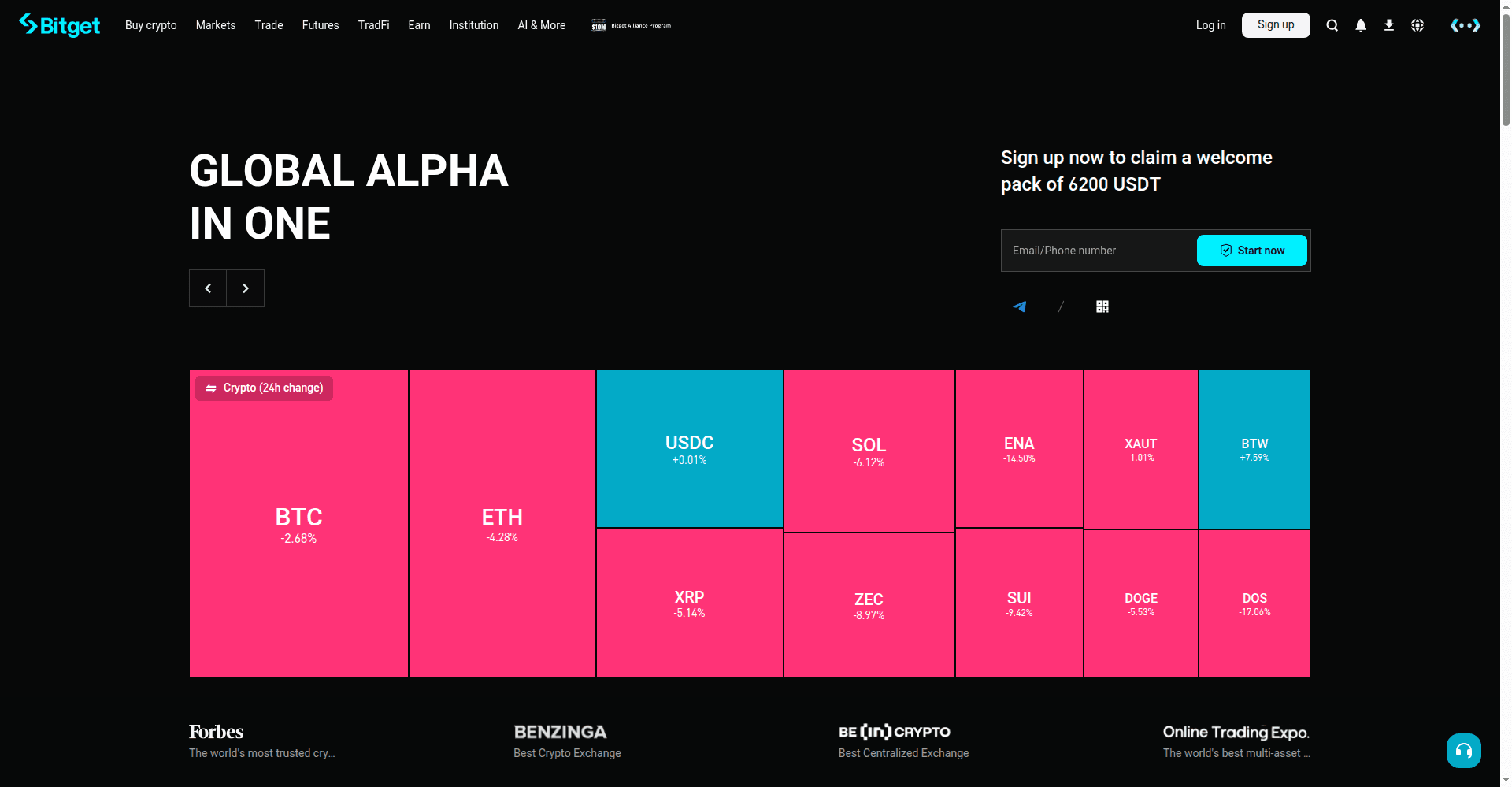
The short version
- Copy trading is the draw. Over 100,000 traders to mirror, with 10 to 20% of your profits going to the trader you follow. It looks passive. It is not.
- Fees are competitive. Spot costs 0.10% each side, 0.08% if you pay in BGB; futures run 0.02% maker and 0.06% taker.
- The September 2026 hack is the context. About $387.5M left the hot and warm wallets; Bitget says its protection fund covers the loss and withdrawals reopened in phases from 28 September. Cold wallets were untouched.
- Regulation is mixed. The MiCA application in Austria is still pending (no EU authorization yet), there is no US service, and no UK presence.
- Not for hands-off beginners. Copy trading looks like a shortcut, but most followed traders underperform over time. Learn first, copy later, if at all.
What Bitget is
Bitget launched in 2018 and grew into one of the largest derivatives exchanges by volume on two promises: cheap perpetual futures and copy trading at a scale nobody else matched. The lineup now covers well over 1,000 spot assets, USDT-M, USDC-M, and coin-margined futures with up to 125x leverage, plus the BGB token woven through fee discounts, VIP tiers, and launch events.
When I look at Bitget, I see a follower economy first and an exchange second. Where other platforms sell you tools, Bitget sells you people: browse elite traders, study their win rates and profit history, and mirror their positions automatically. Whether that is the most beginner friendly product in crypto or the most dangerous one depends entirely on how honestly you assess what copy trading actually delivers.
The September 2026 hack, honestly assessed
On 24 September 2026, Bitget's systems flagged unauthorized transfers from its hot wallets at 18:31 UTC. Over the next hours, about $387.5 million left the exchange's hot and warm wallets across seven blockchains. The company later said attackers had exploited a zero-day flaw in third-party security products and had access since 31 August, while stressing that private keys and cold wallets were not compromised. Chainalysis attributed the theft to North Korea-linked actors and traced the funds moving across four chains within three hours.
The response followed the now-standard crisis playbook, and credit where it is due: withdrawals were paused the same evening, disclosure came quickly, and they reopened in phases from 28 September, starting with Bitcoin, then Ether, then USDT. Bitget said its User Protection Fund, holding 5,500 BTC worth about $464 million at the time, would absorb the loss, and on 30 September it said the fund had been replenished above $300 million. No user balances were reported lost.
What to make of it. The speed of detection and the fund coverage are genuine positives, and the phased withdrawal reopening was handled without the chaos some exchanges produce. But two things deserve plain stating. First, attackers sat inside Bitget's wallet infrastructure for over three weeks before moving funds, which is a long dwell time for a major exchange. Second, the incident is weeks old at the time of this update; the full post-mortem and any recovered funds will matter more than the first-week announcements. Treat the protection fund as a company promise, not an insurance policy, and size your exchange balances accordingly.
Fees and costs
Bitget's headline pricing is straightforward: 0.10% maker and taker on spot, dropping to 0.08% when you pay fees with BGB, and 0.02% maker and 0.06% taker on futures. That puts it in the competitive bracket for active derivatives traders, roughly matching the market on futures and slightly undercutting on spot with the token discount.
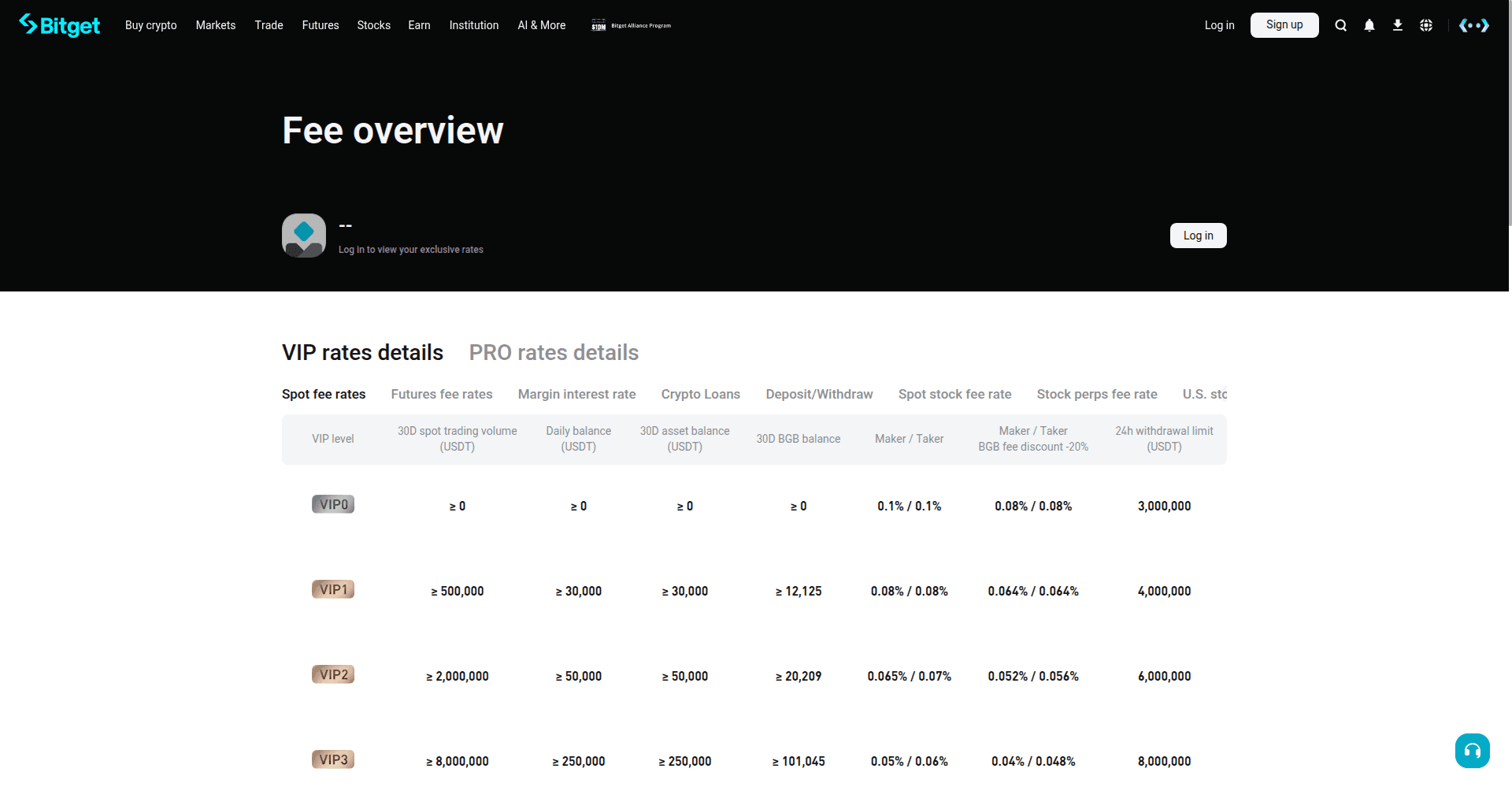
The fee you do not see on the schedule is the copy trading profit share: 10 to 20% of your profits go to the trader you follow, on top of normal trading fees. On a winning streak that is a heavy drag most followers underestimate. Add funding rates on perpetuals, spreads, withdrawal fees, and the BGB price risk if you hold the token for discounts, and the true cost picture is fuller than the headline numbers.
Copy trading
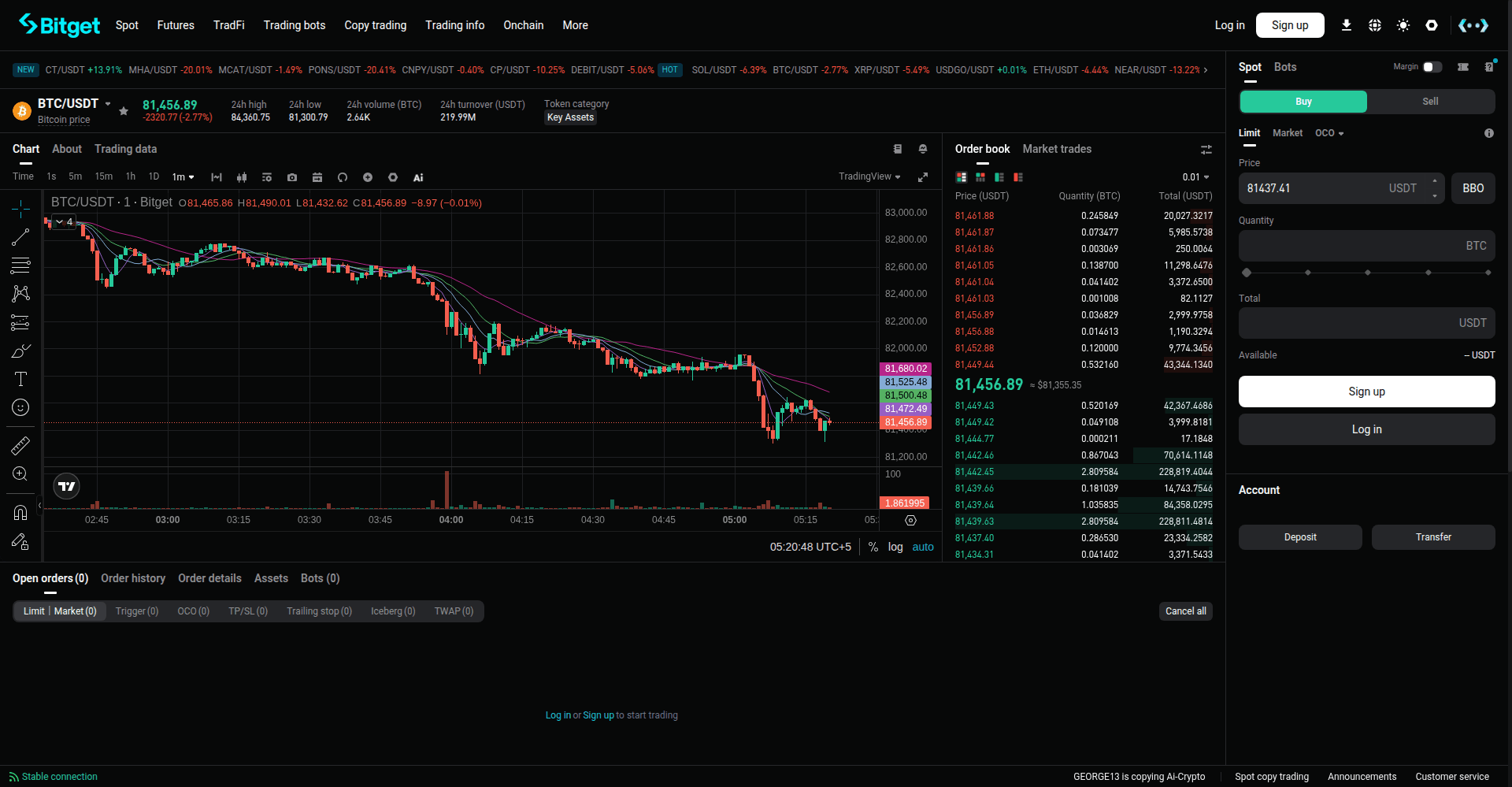
This is Bitget's signature product and deserves a straight explanation. You pick a trader from the leaderboard, set how much to allocate and what leverage to use, and their positions are mirrored in your account automatically. The roster is huge, the stats dashboards are detailed, and getting started takes minutes.
The honest part: leaderboard performance is survivorship-biased by design. Traders who blow up disappear from the top; the ones you see are the recent winners. Most retail copiers would do better learning spot basics first. If you do copy trade, use money you can lose, cap leverage far below the 125x maximum, and never follow a trader whose strategy you could not explain back.
Security and proof of reserves
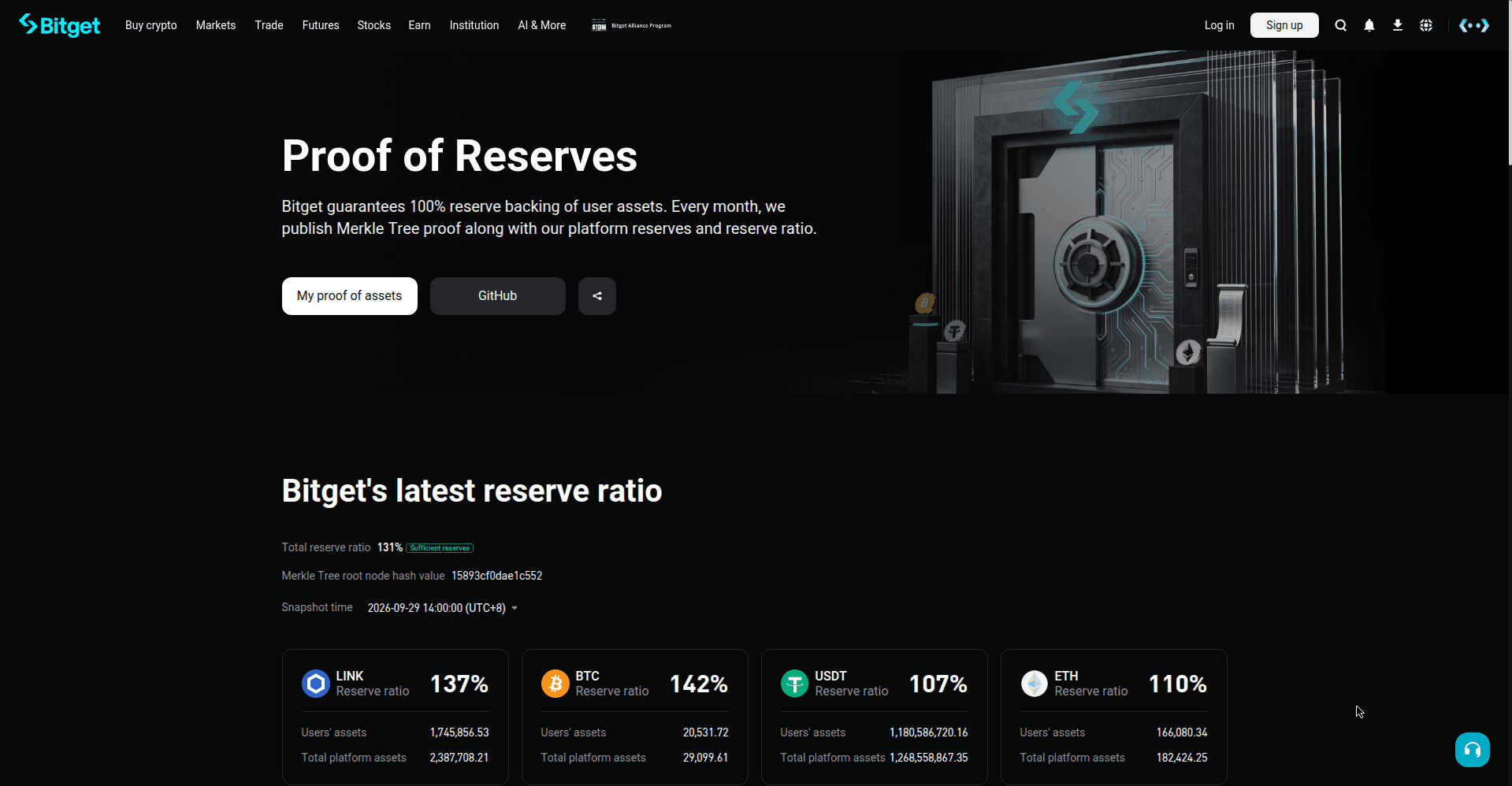
Beyond the September incident, Bitget's stated security stack includes hot and cold wallet separation, two-factor authentication, withdrawal allowlisting, and anti-phishing codes. It publishes monthly proof-of-reserves reports with Merkle-tree verification; the September 2026 report showed a total reserve ratio of 131%, with BTC at 142%, ETH at 110%, and USDT at 107%. The User Protection Fund is meant to stay above $300 million, with wallet addresses published for on-chain checking.
The September hack is the elephant in this section: the controls above did not stop attackers from dwelling in wallet infrastructure for weeks through a third-party flaw. That is not unique to Bitget, state-linked actors have hit nearly every major exchange, but it means the PoR ratios and fund sizes should be read as what they are: transparency tools, not guarantees. Verify what you can, and keep exchange balances to trading size.
Regulation and availability
Bitget does not currently hold a MiCA licence. Its EU entity applied to Austria's Financial Market Authority and, as of October 2026, authorization has not been granted, so Bitget cannot onboard new EU customers and several EU countries sit on its prohibited list. It does hold registrations in other jurisdictions, including Australia, and KYC has been mandatory for all users since September 2023.
The gaps: Bitget does not serve the United States, and it has no UK presence. KYC is mandatory for all users since September 2023. Do not use a VPN to bypass restrictions; it violates the terms and can freeze funds during review. Check the current restricted list for your country before signing up.
Products and trading tools
Around the spot and futures core sits a full menu: copy trading, strategy bots including grid and martingale, spot margin, Launchpad-style token events, an Earn section, P2P markets, and the Bitget Wallet for self-custody. On the TradFi side, Bitget offers stock futures with up to 25x leverage, rToken tokenized exposure, and Stock+ real-share products funded in USDC.
Breadth is the appeal and the risk. The product list rewards users who already understand leverage, funding, and liquidation; it punishes tourists. The demo trading mode is genuinely useful: paper trade the futures interface before committing real money.
How to sign up and verify
Signing up is quick, but the availability check comes first: Bitget does not serve the US or the UK, and EU onboarding is restricted while the MiCA application is pending.
- Confirm Bitget serves your country and that you can complete KYC, which is mandatory for all users.
- Register with your email address, set a strong password you use nowhere else, and enable two-factor authentication right away.
- Complete identity verification with a government ID. Approval is usually quick outside peak periods.
- Turn on anti-phishing codes and withdrawal allowlisting before you deposit anything.
Do not use a VPN to bypass restrictions. It violates the terms and can freeze your funds during a compliance review.
How to deposit
Crypto deposits are the standard route in. Keep it simple and test small first.
- Log in, go to Assets, and choose Deposit.
- Pick the coin and the network, then copy the deposit address. The network must match exactly.
- Send from your wallet or another exchange, and wait for the confirmations to land.
- For fiat, use the Buy Crypto page where your region supports it, and check the charges shown at checkout.
First deposit? Send a small test amount and confirm it arrives before moving the rest.
How to buy crypto (spot)
Spot trading is the calm corner of Bitget. Learn here before touching futures or copy trading.
- Go to Spot and choose your pair, for example BTC/USDT.
- Use a limit order while you are learning: set your price and wait for the fill. Market orders fill instantly at the going price.
- Enter the amount, check the 0.10% fee (or 0.08% if you pay with BGB), and confirm.
- Your coins land in your spot account. Use the demo trading mode to practice futures before committing real money.
Copy trading can wait. Most followed traders underperform over time, so learn what a good trade looks like before you mirror anyone.
How to withdraw
Withdrawals reopened in phases after the September hack, and the habit to build is simple: keep only trading-size balances on the exchange.
- Go to Assets, then Withdraw, and choose the coin.
- Paste your external wallet address and select the network. Double-check both.
- Review the withdrawal fee shown and confirm with your 2FA.
- For large amounts, do a small test withdrawal first.
Whatever the protection fund promises, your own wallet is the safest place for savings.
What users say: ratings
Our verdict is our own, but it is worth seeing how other users rate Bitget on public platforms. These are third-party ratings, checked in October 2026, and they move over time.
| Platform | Rating |
|---|---|
| Trustpilot | 2.2 out of 5 (~2,300 reviews) |
| Google Play | 4.5 out of 5 |
| Apple App Store | 4.6 out of 5 |
The low Trustpilot score reflects dispute-driven reviews; app-store users rate the mobile apps considerably higher.
Pros and cons
Pros
- Largest copy trading roster in the industry
- Competitive futures fees at 0.02%/0.06%
- Protection fund with published on-chain addresses
- Monthly proof of reserves, 131% in September 2026
- EU entity pursuing MiCA authorization in Austria
- Stock futures and tokenized equity products
Cons
- $387.5M hack in September 2026, post-mortem still fresh
- Copy trading profit share of 10 to 20% on top of fees
- No US service, no UK presence
- Leaderboard stats are survivorship-biased
- BGB discount ties fee savings to token price risk
Who it suits, and who should skip it
Bitget suits active derivatives traders who want low futures fees and deep perpetual liquidity, and experienced users who understand copy trading's risks and want the biggest roster to choose from. It also works for spot traders in supported regions who want BGB-discounted fees.
Skip Bitget if you are in the US or UK, if you want your exchange under the strongest available regulation, if the September hack puts you off regardless of the fund coverage, or if you are a beginner tempted by copy trading as a shortcut. There are no shortcuts; learn spot first.
Alternatives to consider
Bybit competes directly on derivatives with its own post-hack trust story and deeper TradFi products. Binance offers the widest product range at similar or lower fees. For maximum regulatory cover, Kraken and Coinbase lead. Our best crypto exchanges of 2026 guide compares the leading venues by fees, availability, and trust factors.
Verdict
My honest take: Bitget is a capable derivatives exchange with the industry's deepest copy trading bench and genuinely competitive fees. The September 2026 hack is the unavoidable context. The response was fast and the protection fund did its job, but attackers sat inside the wallet infrastructure for weeks, and the full story is still being written. That earns Bitget a cautious rating, not a clean one.
If you use it, use it for what it does well: active futures trading, and copy trading only if you truly understand the risks, with money you can afford to lose. Keep balances modest, check the proof of reserves yourself, and hold the rest in self-custody.
Bitget questions
Is Bitget safe after the September 2026 hack?
On 24 September 2026, attackers drained about $387.5 million from Bitget's hot and warm wallets. Bitget detected the breach within hours, paused withdrawals, and said its User Protection Fund, then holding about $464 million in Bitcoin, would cover the loss. Withdrawals resumed in phases from 28 September. Cold wallets were not touched and no user balances were reported lost, but the incident is recent and the full post-mortem matters more than any marketing claim.
What happened in the Bitget hack?
Bitget's systems flagged unauthorized transfers from hot wallets at 18:31 UTC on 24 September 2026. The exchange later said attackers exploited a zero-day flaw in third-party security products and had access since 31 August, without compromising private keys or cold wallets. Chainalysis attributed the theft to North Korea-linked actors and traced $387 million moving across four blockchains within three hours.
What are Bitget's trading fees?
Bitget charges 0.10% maker and taker on spot, reduced to 0.08% when fees are paid in the BGB token. Futures cost 0.02% maker and 0.06% taker at the entry tier. Copy trading uses the standard trading fees plus a profit share of 10 to 20% that goes to the trader being followed.
Is Bitget available in the US?
No. Bitget does not serve US residents, and using a VPN to bypass the restriction violates its terms and can leave funds stranded during a compliance review. KYC verification is mandatory for all users.
What is Bitget copy trading?
Copy trading lets you automatically mirror the trades of experienced traders on the platform. Bitget claims over 100,000 elite traders to follow. You pay the normal trading fees plus a share of profits, typically 10 to 20%, to the trader you copy. Past performance does not predict future results, and most copied traders underperform over time.
What is the BGB token?
BGB is Bitget's native exchange token. Holding and using it pays for trading fees at a discount, cutting spot fees from 0.10% to 0.08%, and it factors into VIP tiers and launchpad-style events. Like all exchange tokens, its value is tied to the platform's fortunes.
How this review was written: This review was originally published on 31 July 2024 and last reviewed on 10 October 2026. Fees, availability, and product details were checked against Bitget's published schedules and announcements at review time. Exchanges change terms often; verify the live fee schedule for your region before trading. Educational content, not financial advice.