perpetuals · multichain · derivatives
Aster
A multichain perpetuals venue with Simple and Pro interfaces, multiple contract fee schedules, and wallet-based access.
Affiliate disclosure: CryptosBeginner may earn a commission if you use this partner link. It does not affect listing order, editorial inclusion, fees, or safety.
Access model
Wallet-first
Fee lens
Aster's official schedule lists USDT perps at 0% maker / 0.04% taker, USD1 perps at 0% maker / 0.005% taker, and stock perps at 0% maker / 0.009% taker.
Network scope
Multiple supported networks; confirm the live network selector
Verification
Wallet-first; checks vary
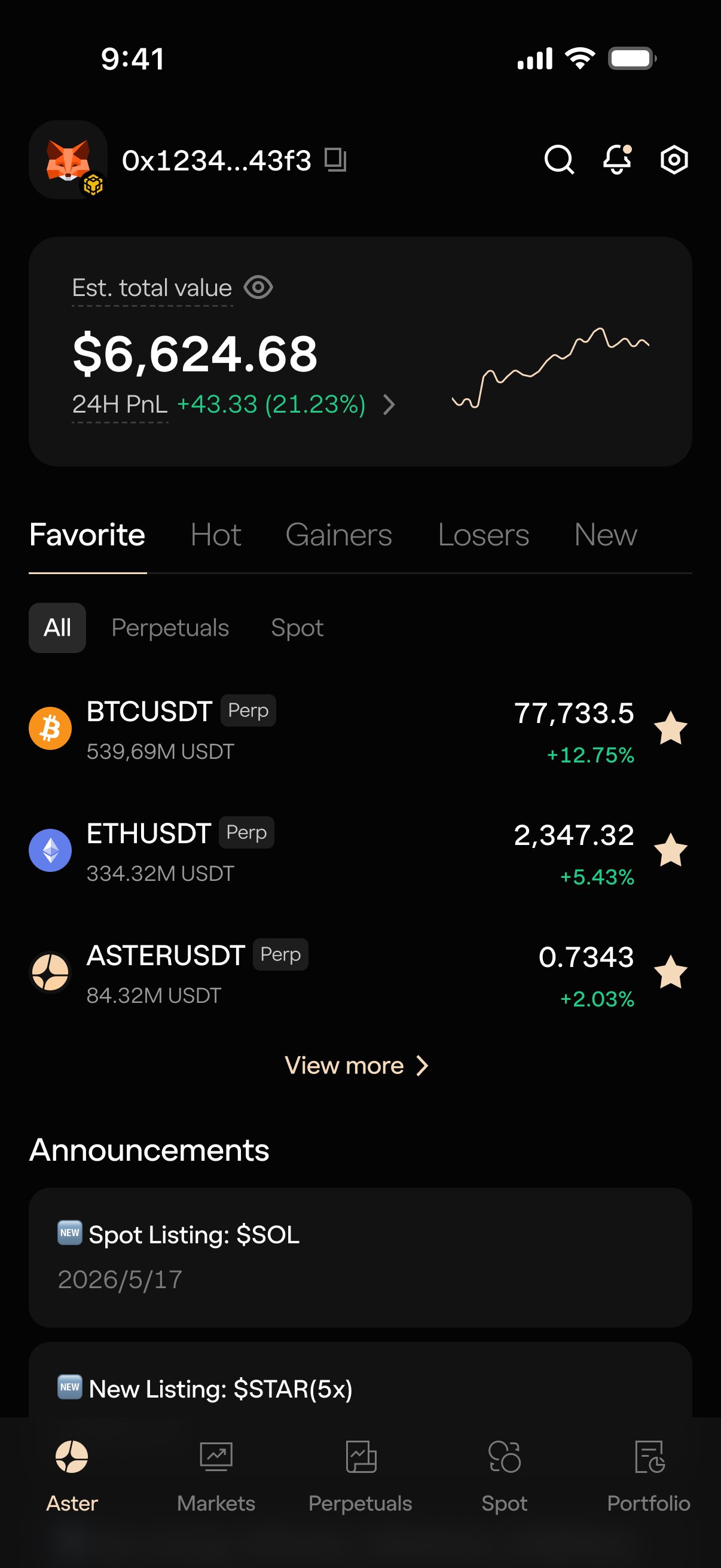
Official product visuals
Website and interface views
Provider-owned visuals; not independent performance evidence

Editorial read
What stands out about Aster?
Aster presents a derivatives interface with separate Simple and Pro modes and more than one contract family. Its official fee documentation distinguishes USDT perpetuals, USD1 perpetuals, and stock perpetuals rather than offering one blended rate. That separation matters: contract type, funding, margin, liquidation, and any token-based discount can change the actual cost and risk profile.
Best suited to
Experienced users comparing perpetual-contract interfaces and reading the contract-specific fee and risk terms before using leverage.
Read before you trade
Perpetuals and stock-perpetual products carry leverage, liquidation, funding, oracle, counterparty, and market-structure risks. Read the exact contract specification and regional eligibility notice before connecting a wallet.
Availability: Market, chain, jurisdiction, account, and product mode dependent.
Verification: The public interface is wallet-oriented, but the reviewed product is a derivatives venue where market, regional, account, and compliance policies may apply. This profile does not make a no-KYC or unrestricted-access claim.
Assets: USDT, USD1, and stock-perpetual markets listed in the selected product mode.
What may work well
- Contract-specific published fee schedule
- Simple and Pro interface modes
- Multichain product positioning
Trade-offs to understand
- Leveraged derivatives risk
- Different products have different fees
- Token discounts and live terms require verification
FAQ
Questions readers usually ask
How does Aster charge users?+
Aster's official schedule lists USDT perps at 0% maker / 0.04% taker, USD1 perps at 0% maker / 0.005% taker, and stock perps at 0% maker / 0.009% taker. Paying fees in $ASTER is documented with a 5% discount; funding and other costs remain separate.
Does Aster require KYC?+
The public interface is wallet-oriented, but the reviewed product is a derivatives venue where market, regional, account, and compliance policies may apply. This profile does not make a no-KYC or unrestricted-access claim.
Which networks or assets does Aster support?+
Aster describes support for Multiple supported networks; confirm the live network selector. The current network and token list can change, so confirm the live interface before signing a transaction.
What should I check before using Aster?+
Perpetuals and stock-perpetual products carry leverage, liquidation, funding, oracle, counterparty, and market-structure risks. Read the exact contract specification and regional eligibility notice before connecting a wallet. Compare the route, slippage, network fee, contract address, and local obligations before using the service. This profile is educational comparison content, not a personal recommendation.
Educational comparison only. Provider terms, fees, policies, and access can change.