Updated 14 October 2026 · Originally published 11 July 2025 · By Alex Rivera · Reviewed for CryptosBeginner
Tevau Card Review 2026: Fees, Availability & Is It Worth It?
Tevau is a Hong Kong-based crypto card that lets you load USDT or USDC and spend it like a normal Visa card, with tiers from a $20 virtual card up to a $499 24K gold card and no monthly fee. The honest story: the fees are reasonable, but availability moved in 2026, so check your country before anything else.
Alex Rivera · Crypto researcher, CryptosBeginner
Every review is research-led: specs, fees, and availability are checked against official sources before publication and re-checked on every update. Affiliate links never influence verdicts. Last reviewed 14 October 2026.
The short version
- Availability changed in 2026. Virtual cards were removed for Algeria, Egypt, and Turkey around August 2026. Confirm your country in the app before you fund anything.
- USDT-first Visa card. Load USDT or USDC, spend like a normal debit card in stores, online, and at ATMs.
- Four tiers, no monthly fee. $20 virtual, $100 plastic, $199 metal, $499 24K gold. No monthly or annual fee on any tier.
- Fair usage fees. About 1% to top up, 1.2% FX on conversion, 1.9% at ATMs, and a $3 inactivity fee after 90 days idle.
- KYC is mandatory. Government ID plus a selfie. No anonymous option.
- Extras and limits. Earn up to 4.49% APR on idle USDT (promotional, conditions apply). Reviewers report spending limits up to $3M daily and monthly, though Tevau does not publish these.
- Thin review base. Google Play shows about 3.4 out of 5 from a few hundred ratings, and there is no Trustpilot listing. Judge it on the terms, not the crowd.
What Tevau is (and is not)
Tevau is a crypto debit card from a Hong Kong company that launched in 2024. You load it with USDT or USDC, and it spends like a normal Visa card: in stores, online, and at ATMs. It is not a bank account and not an exchange. It is a way to spend stablecoins in the real world without cashing out to fiat first.
The card comes in four tiers: a $20 virtual card, a $100 plastic physical card, a $199 metal card, and a $499 24K gold card. There is no monthly or annual fee on any of them, which is genuinely good in a market where premium metal cards often carry yearly charges. The product is aimed squarely at crypto natives who already hold USDT and want to spend it directly.
On the regulatory side, Tevau's Bank of Canada PSP (payment service provider) registration was approved in August 2026. That is a registration, not a guarantee of your funds, and it does not change the custodial reality of the product, which we cover in the risks section below.
Availability: the part that changed
This is the section that matters most, because it changed. Tevau advertises availability in 180 to 200-plus countries, but that headline number hides the details. Here is the honest picture, using a simple three-state model: available, unavailable, unclear.
- Unavailable: Algeria, Egypt, Turkey. Virtual cards were removed for these three countries around August 2026. Tevau cites Visa compliance requirements. If you are in one of these countries, do not plan around a Tevau virtual card until the situation is confirmed in the app.
- Unavailable for onboarding: United States. US residents cannot currently sign up. An already-issued card still works when you travel in the US, but you cannot create an account from there.
- Unclear: Bangladesh, Thailand. Community reports describe problems for users in these countries. We could not independently confirm whether these are temporary, account-specific, or policy-level, so treat them as unconfirmed.
What this means for you: check your country inside the Tevau app before you fund anything, and treat availability as something that can change. The August 2026 removals prove that card-network rules can pull a product from a country with little warning. If Tevau is your only way to spend crypto, that is a risk worth planning around.
How to sign up
Signing up is straightforward, but do it in the right order: confirm your country first, verify your identity second, and only then think about funding the account.
- Go to Tevau's site or download the Tevau app and start a new account with your email or phone number.
- Set a strong password, and turn on two-factor authentication if the app offers it.
- Confirm your country of residence carefully, because availability and card options depend on it.
- Do not fund the account until you have completed KYC and confirmed your country is supported.
How to complete KYC
KYC is mandatory on Tevau. There is no lite tier and no anonymous option, so have a government-issued ID and your phone ready before you start.
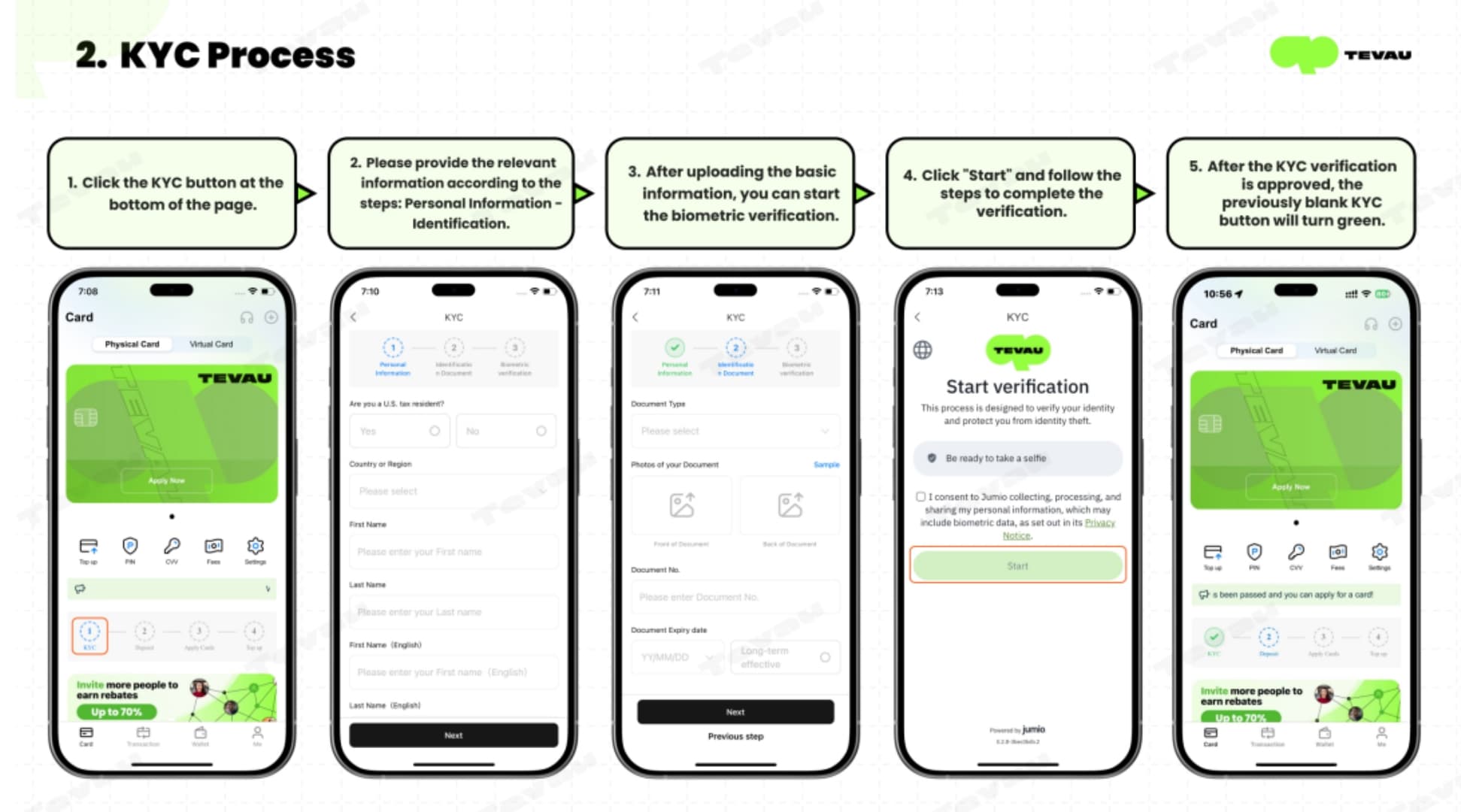
- In the app, open the verification section and select your country and ID type.
- Photograph the front and back of your government ID in good light. Blurry photos are the most common reason for delays.
- Take a live selfie when prompted and follow the liveness check instructions on screen.
- Submit and wait for approval, then confirm your verification status in the app before ordering a card.
How to top up with USDT
Tevau is USDT and USDC first. If your crypto is in anything else, convert it to USDT on an exchange first, then send it to your Tevau deposit address. Always send a small test amount before the full top-up: a wrong network means lost funds.
- In the app, open the top-up or deposit section and select USDT (or USDC) plus the network you will send on.
- Copy your Tevau deposit address, and make sure the network matches the one you are sending from.
- Send a small test amount from your exchange or wallet and wait for it to arrive.
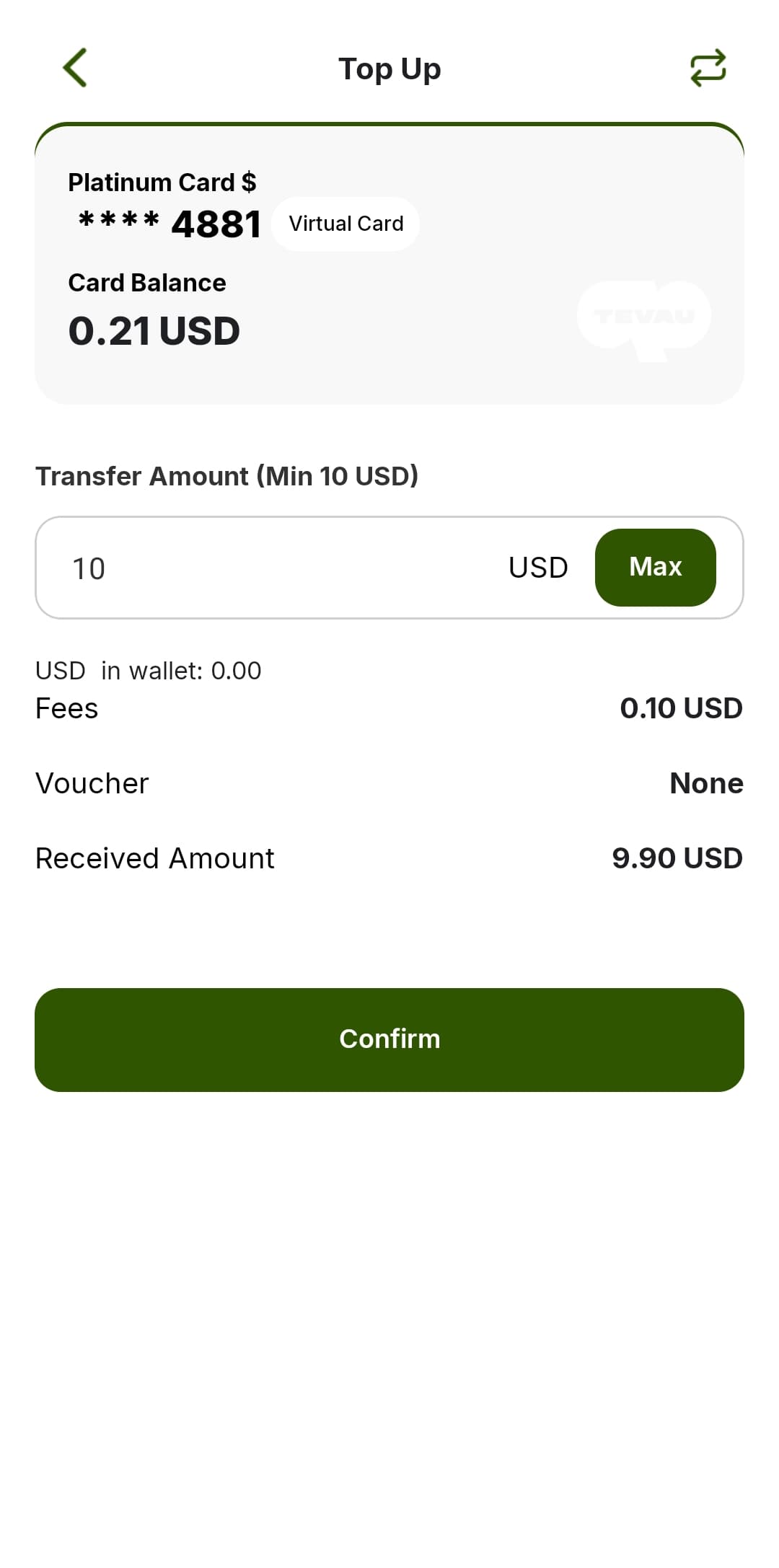
- Once the test lands, send the rest. Remember the top-up fee is about 1%.
How to order your card
You can start with a virtual card for online spending, then add a physical card later for in-store and ATM use. Virtual costs $20, plastic physical $100, metal $199, and 24K gold $499. No monthly or annual fee on any tier.
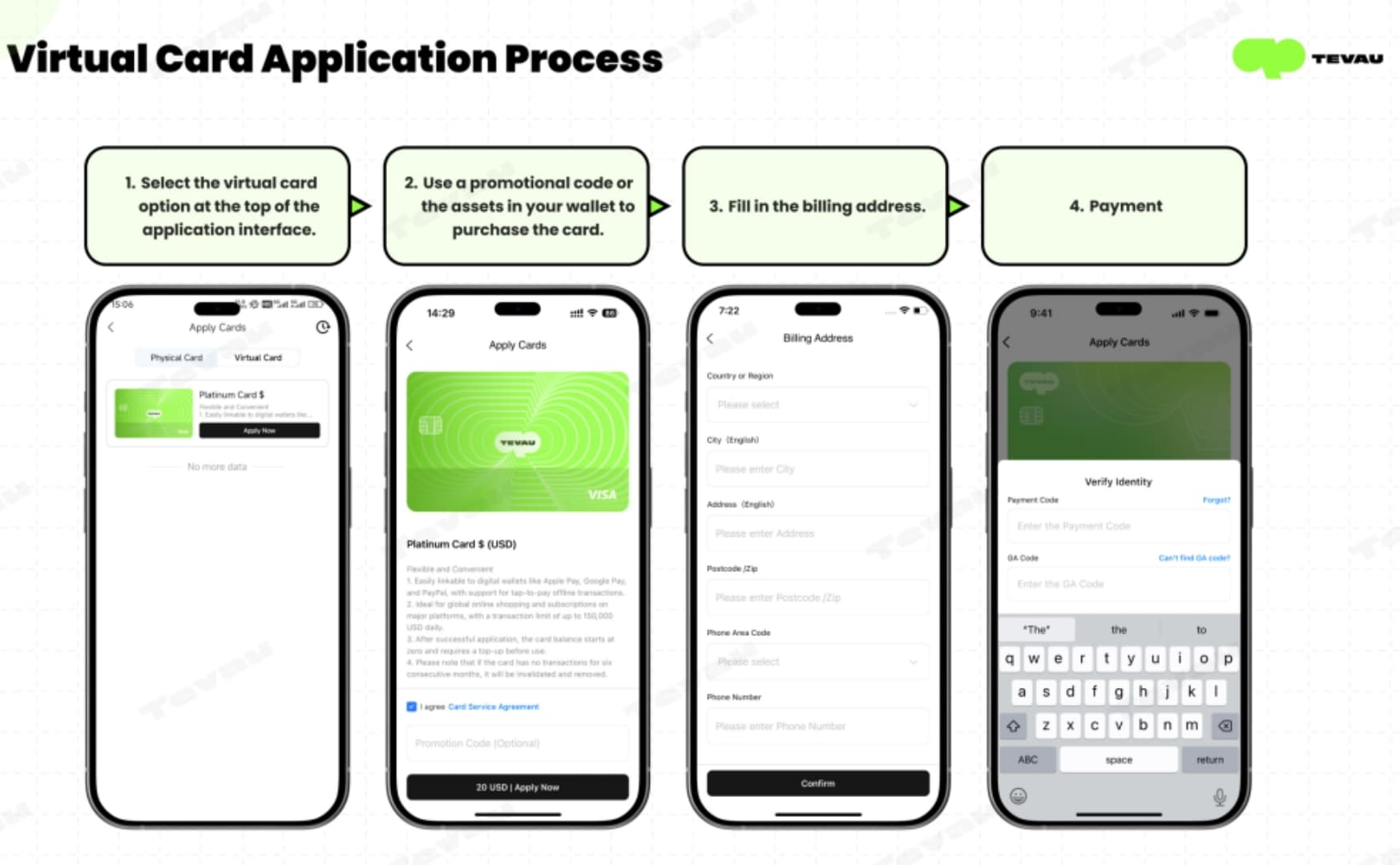
- With KYC approved, open the card section and choose virtual or physical.
- Pick your tier and confirm the issuance fee. The virtual card is the cheap way to test the product.
- For a physical card, enter your shipping address and pay the issuance fee from your balance.
- Activate the card in the app when it arrives. Virtual cards activate immediately. Then set your PIN.
How to spend with the card
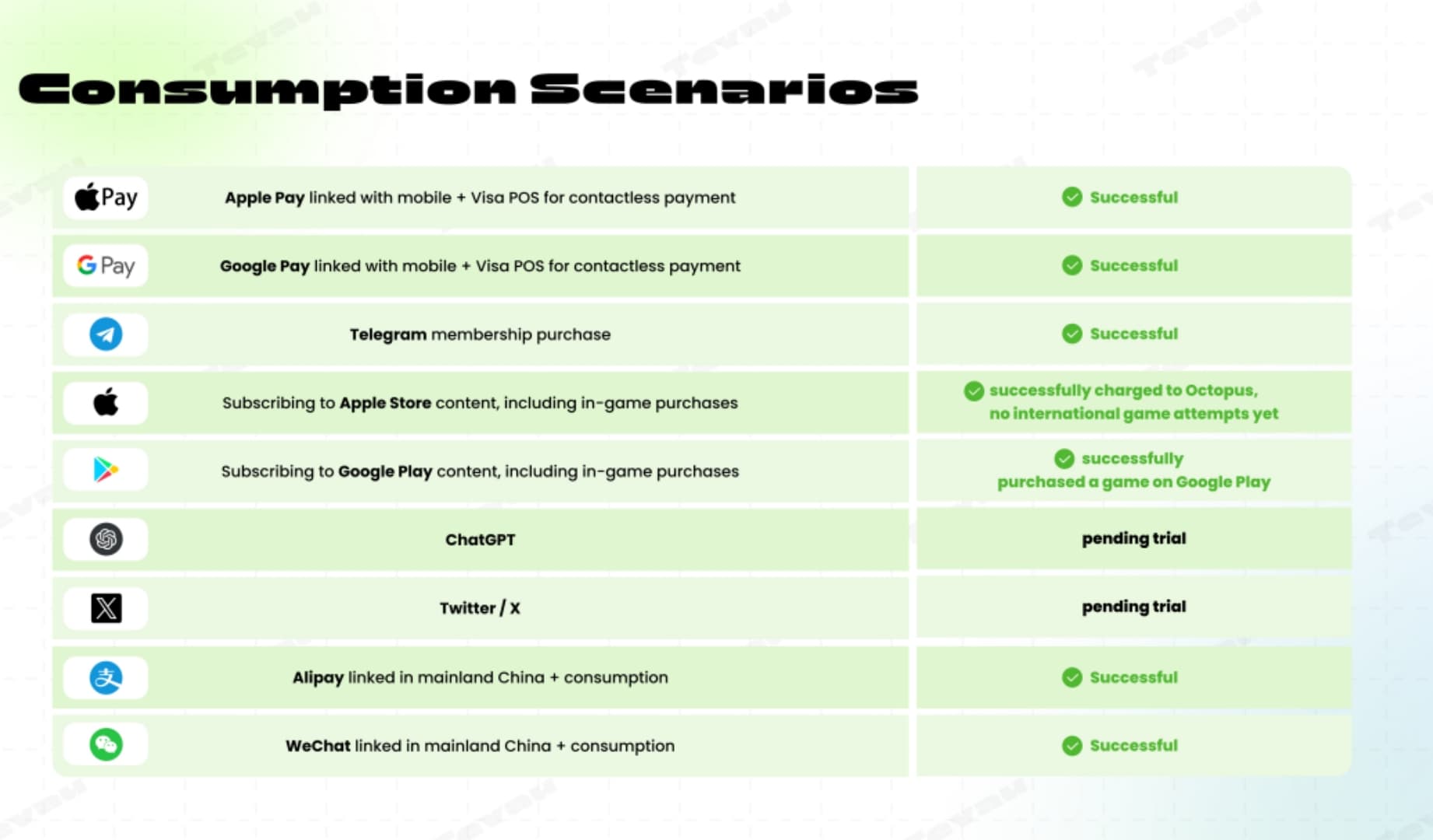
Once activated, the card spends like a normal Visa debit card: tap in stores, pay online, and add it to Apple Pay or Google Pay where supported. Tevau converts your USDT balance at the point of sale, with a 1.2% FX fee when the purchase currency differs from your balance currency. If you spend in a different currency often, that fee adds up, so it is worth knowing about before you travel.
ATM withdrawals
Physical cards work at ATMs, which is handy when you need cash. The catch is the 1.9% ATM withdrawal fee, plus whatever the ATM operator charges on top. For small withdrawals the combined cost is steep, so ATMs make most sense for larger, less frequent pulls. Check your daily ATM limit in the app before you travel, since limits vary.
Fees, verified October 2026
The figures below are approximate, verified against Tevau's published FAQ in October 2026. Always confirm the final numbers in the app before you order or transact, because fees can change.
| Fee | Amount (verified October 2026) |
|---|---|
| Virtual card issuance | $20 |
| Physical card (plastic) issuance | $100 |
| Metal card issuance | $199 |
| 24K gold card issuance | $499 |
| Monthly or annual fee | None |
| Crypto top-up fee | About 1% |
| FX (currency conversion) fee | 1.2% |
| ATM withdrawal fee | 1.9% |
| Inactivity fee | $3 after 90 consecutive days of no activity |
The fee structure is honest and simple: no monthly fee, a modest top-up charge, and the real costs show up on FX and ATM use. The $3 inactivity fee is easy to avoid if you use the card at least once every three months.
Video review
I recorded a full walkthrough of the Tevau card: the tiers, the fees, and the availability changes explained on camera. Watch it below.
What users say: ratings
Our verdict is our own, but public ratings give a sense of how other users experience Tevau. The honest framing first: the review base is thin, so read these as rough signals, not verdicts.
| Platform | Rating |
|---|---|
| Google Play | About 3.4 out of 5 (around 700 ratings) |
| Apple App Store | Not enough ratings to display |
| Trustpilot | No listing found |
A 3.4 on Google Play from a few hundred ratings is not a red flag on its own, but it is not a vote of confidence either. Treat it as too little data to lean on, and weigh the fees, terms, and availability facts above instead.
Pros and cons
Pros
- No monthly or annual fee on any tier
- Modest top-up fee of about 1%
- High spending limits reported by reviewers: up to $3M daily and monthly (reviewer-reported, not official)
- Tevau Earn: up to 4.49% APR on idle USDT (promotional, conditions apply)
- Physical cards with ATM access
- Metal and 24K gold tiers for those who want them
- Bank of Canada PSP registration approved August 2026
Cons
- Virtual cards removed for Algeria, Egypt, and Turkey in August 2026
- US onboarding closed; existing cards only work for travel there
- KYC mandatory, no anonymous option
- USDT and USDC only; convert everything else first
- No cashback or rewards program
- $3 inactivity fee after 90 days with no activity
- Custodial: your balance sits with Tevau, not in your wallet
- Thin public review base
Risks and honest caveats
Custodial risk. A Tevau card is not self-custody. Your USDT sits with Tevau until you spend it, so if the company runs into trouble, your balance is exposed. Keep spending money on the card, not savings.
Availability can change. The August 2026 removals are the proof. Card-network compliance can pull a product from a country with little warning. Do not build your only way of spending crypto around a single card.
Tax on spending crypto. In many countries, spending crypto counts as disposing of it, which can be a taxable event even when it feels like just buying coffee. Check your local tax rules before you spend regularly.
Promotional rates and reported figures. The 4.49% APR Earn rate is promotional and comes with conditions. The high spending limits are reported by reviewers, not published by Tevau. Verify both in the app for your own account before relying on them.
Verdict
Tevau is a fair deal for a specific person: you hold USDT, you can pass KYC, you live in a supported country, and you want to spend stablecoins without cashing out first. No monthly fee, a roughly 1% top-up fee, and Earn on idle USDT make the economics decent for regular spenders.
The caution flags are real, though: availability moved in 2026, there is no cashback, and your money sits with Tevau until you spend it. Skip it entirely if you are in Algeria, Egypt, or Turkey until virtual cards return, and skip it if anonymity matters to you. For everyone else in a supported country, start with the $20 virtual card and see if the product earns the upgrade.
Tevau questions
Is Tevau available in my country?
Tevau claims 180 to 200-plus countries supported, but check before you count on it. In August 2026 it removed virtual cards for Algeria, Egypt, and Turkey over Visa compliance issues, US residents cannot currently onboard (an already-issued card still works when you travel in the US), and users have reported problems in Bangladesh and Thailand. Availability moves, so confirm your country inside the app before you fund anything.
Why did Tevau remove virtual cards for Algeria, Egypt, and Turkey?
Tevau points to Visa compliance requirements. The practical effect is that new users in those countries can no longer order a virtual card, and existing users should check whether their card still works before relying on it. It is a reminder that any crypto card's availability can change when card-network rules shift.
What does the Tevau card cost?
Issuance costs $20 for the virtual card, $100 for the plastic physical card, $199 for the metal card, and $499 for the 24K gold card, with no monthly or annual fee on any tier. Usage fees, verified October 2026 and approximate: about 1% to top up, 1.2% FX on currency conversion, 1.9% on ATM withdrawals, and a $3 inactivity fee after 90 consecutive days of no activity.
Do I have to verify my identity to use Tevau?
Yes. KYC is mandatory on Tevau: a government-issued ID plus a selfie, with a liveness check in the app. There is no lite tier and no anonymous option, and that is not expected to change.
Which crypto can I load onto Tevau?
USDT and USDC. If your crypto is in anything else, convert it to USDT on an exchange first, then send it to your Tevau deposit address. Always send a small test amount before the full top-up.
Is Tevau safe to use?
Tevau is a Hong Kong company that launched in 2024, and its Bank of Canada PSP registration was approved in August 2026. That is a registration, not a guarantee of your funds. The card is custodial, so your balance sits with Tevau, not in your own wallet. Keep spending money on the card, not savings, and note the public review base is thin, with Google Play showing about 3.4 out of 5.
Does Tevau offer cashback?
No. Tevau has no cashback or rewards program. What it does offer is Tevau Earn: up to 4.49% APR on idle USDT, which is promotional and comes with conditions, so read the terms before counting on the rate.